
Chapter Text
“Land on Saturday, settle on Sunday, school on Monday.” Or so the saying went.
Joey Baldazzi had been rolling his eyes as he had said that. “You Jews. Land on Saturday, settle on Sunday, school on Monday.”
Or at least that was what Henry Rogarshevsky, who had been in America for nearly a year now, had said Joey had said. Jakub hadn’t been able to understand Joey, just that he was rolling his eyes and shaking his head and laughing. Henry had told him in Yiddish what the other boy was saying.
But, just like Joey had said, bright and early on Monday morning, Mame had walked both him and Józef to school.
Józef wasn’t in the same class as Jakub. He was too old, Henry said, and all the older immigrant kids had their own steamer class for six months before they were shoved into the main classrooms.
Everyone else started at the first grade.
The classroom was cramped and crowded, even more so than the heder had been. There were three, sometimes four, children jammed on a bench that appeared to have been really designed to only seat two.
But somehow, everyone fit on the wooden planks. Then the teacher said something in English and everyone came to attention as she came to a stop in front of the desk where Jakub was sitting with Henry and another boy.
She was a tall woman, dark haired, dressed neatly in plain calico. Young, maybe. Certainly younger than Mame. She was saying something to him, but he had no idea what.
Henry prodded him in the side “That’s Miss Rodman. You’re to show her your nails – she checks to make sure everyone’s hands are clean each morning. And tell her your name.”
Jakub offered her his hands and she turned them over, inspecting first the front, then the back. “Ikh heys Jakub Kowalski.”
Miss Rodman shook her head firmly. “No. You.” A finger poked his chest as she said loudly and slowly, “are Jacob.”
And just like that, he had a new name. Henry told him later that, aside from whispers to help kids like him fresh off the boats, anyone caught speaking any language that wasn’t English – Yiddish, Italian, Polish, Russian, it didn’t matter – in school got a caning.
"I pledge allegiance to my Flag and to the Republic for which it stands, one nation, indivisible, with liberty and justice for all,” was the first real sentence in English that Jakub learned at school.
The streets weren’t paved with gold, after all, and Jakub supposed that Tobjasz would just have to be disappointed that he couldn’t send any back.
Mame found a job at a shirtwaist factory. At night, she and the other women of the tenement would sit at the kitchen table, bent over piecework that would be sold to the stores and factories. Eighty-four cents for a dozen trousers, eight cents for a round coat, and ten cents for a frock coat. Sometimes, once Mame had assured herself he and Józef were ready for school the next day, they sat at the table and helped cut and sew and finish as well.
Tate worked at a tailor shop by day and peddled fruit on a pushcart in the early dawn and late evenings. Apples in the fall, lemons and oranges in the winter, cherries in the spring, watermelon and peaches in the summer.
There were over a dozen people who shared the three rooms they lived in – a bedroom, a kitchen, and a living room. Mame, Tate, Jakub and Józef, Mr. and Mrs. Rogarshevsky and their six children, and five boarders. He and Józef shared a bed and counted themselves lucky for it – all four of the Rogarshevsky boys had to share a single bed.
Yiiddish was as common as English in the neighborhood – mixed in with Polish and Russian and even some Italian and so many other languages he couldn’t even figure out which was what yet – there wasn’t a single boy who could go a day without a bubbe in a tichel giving him and his friends a scolding for whatever recent stunt they pulled, threatening to tell their mothers if they kept it up. Except for Józef. Józef was a good boy and spent most of his days, when he wasn’t at school or selling newspapers or helping Mame and the other women with piecework, at the library – the giant lions standing guard over him.
Jakub went exploring instead. He learned English, first the words and then how to sound the words just right so that the teachers stopped looking at him funny – and then, once he mastered that, he tried to copy English the way the Russians or the Poles spoke it. Then he tried to figure out how the Italians spoke, and their languages. Joey would laugh a bit, but then correct him on his pronounciation or when he got a word wrong.
After a long day at school trying not to fidget too much at their desks, because otherwise they would get smacked for not paying attention, he and the other neighborhood boys would wander around the neighborhood and learn which grocers and bakers were willing to hand a boy some small coin or treat in exchange for running errands and other small chores. He quickly learned that the store owners liked him better if he could talk to them in their language. Mr. Schimmel was his favorite, though. Sometimes, if they asked nicely enough and did a good enough job, Mr. Schimmel would even give them one whole knish, all to themselves!
There were so many people living here and so many tall buildings – more than he had ever thought was even possible. Laundry lines stretched across the street, and the clothes were never quite all the way white when they dried, but they were still clean enough. Laundry was a whole day affair left for Sundays, when nearly everyone pitched in. Buckets and buckets of water had to be hauled up four flights of stairs, and then coal too so that it could be boiled. Everyone knew not to run around too much on Sundays, and especially not to knock a clothesline over – because then they would be in for a beating for sure.
Sometimes, Mame wouldn’t get home at work until late at night, because someone else had asked if she could cover their shift. Mame always said yes, because they needed the money, but he and Józef were usually asleep by the time she came home, no matter how hard they tried to wait up for her.
On those nights, sometimes Jakub woke to the soft creak of Mame sitting by the side of his bed, combing through his messy hair with a finger and softly singing to him.
“Yankele vet leirnen Toire,
Toire vet er leirnen,
Briwelach vet er schreiben,
Fil gelt vet er fardinen.”
It was Shabbos afternoon, and Shabbos meant that Mame only had to work seven hours at the shirtwaist factory instead of twelve. Józef and Jakub were always there at the factory to pick her up at five o’clock to walk her home. No matter what friends they had to say goodbye to, no matter how good a library book was – they would be waiting in front of the factory for Mame by five o’clock.
But when they got to the factory, there was a cloud of smoke hanging over the building. And all the way up there, by the windows, was a press of faces. The flames from the floor below were beating in their faces.
Jakub could almost feel the heat of those flames even all the way from the ground.
"Call the firemen!" they screamed.
"Get a ladder!" they cried.
There was the siren of a fire engine off in the distance, coming closer and closer. More sirens sounded from several directions.
"Here they come," the crowd was shouting. "Stay right there!"
Some of girls were running down the first escape, but then the metal gave way with a sick groan, twisting and collapsing as it bent and buckled and pulled away from the building. The people screamed. The metal screamed. And then there was no more screams. Not from them, anyway.
One girl climbed out onto the window ledge from the second highest floor. The ones behind her tried to hold her back. And then she just – dropped into the air.
Jakub had thought she had to just be a bundle of clothing, at first. It couldn't be a person. It had to be a doll, or a bunch of shirtwaists bundled together.
Then came the harsh thump.
Another girl was climbing out onto the window sill, others crowding beside her. And then she fell – waving her arms, trying to keep her body upright until the very last moment.
Then, thump. A silent, unmoving pile of clothing and limbs.
The firemen were here. Some of them began to raise a ladder. Others rushed out with a net and hurried to the sidewalk to hold it out under the girls as they came. The bundles of clothing broke through the net, as cleanings as Sam teaching his mutt to jump through a hoop.
The thumps sounded just as loud as if there had been no net there at all. The thumps sounded so loud that he wondered if the entire city could hear it. It felt like they should.
Józef grabbed him and turned him away from the factory, pressing his face tight against the wool of his jacket so that he couldn't see the factory anymore. Arms circled around his back, holding him there. Keeping him from turning around.
He could still hear the thumps and the screams and the screams ending, anyway.
Thump.
Thump.
Thump.
Thump.
He could feel Józef’s breaths coming in hard and ragged and unsteady, almost in time with the thumps. The heave of his stomach and chest and the choking of his voice.
"Mame," Jakub cried. "Mame!"
And then, before he knew it, just like that – it was over. The fire was out. The screaming from the factory had stopped, only to be replaced by the screaming of the crowd as they demanded answers, demanded their loved ones.
Only last winter, Mame and what felt like half the Lower East Side had gone on strike to demand better working conditions and more safety precautions and increased pay. She had come home limping, beaten black and blue and purple by batons and truncheons. And now the water running into the gutter from the firemen’s hoses was red with blood.
Józef turned on Jakub, eyes blazing. “Go!” he shouted. “Go find Tate – go now!”
Jakub hesitated.
“Go!”
Jakub ran and ran and ran, his feet pounding on the uneven cobblestones.
Blessed are You, Lord, our God, King of the universe, the true Judge.
But no matter how hard he tried, he couldn’t outrun the sickly sweet smell of burning flesh, the thumps on the pavements, or the flood of water trickling between the cobblestones in little stream. Water stained red with blood.
“Yitgadal v’yitkadash sh’mei raba.”
The words of the Mourner’s Kaddish washed over Jakub. His mouth moved, he could hear himself speaking, feel the vibrations in his throat – but it didn’t feel real.
Glorified and sanctified be God’s great name.
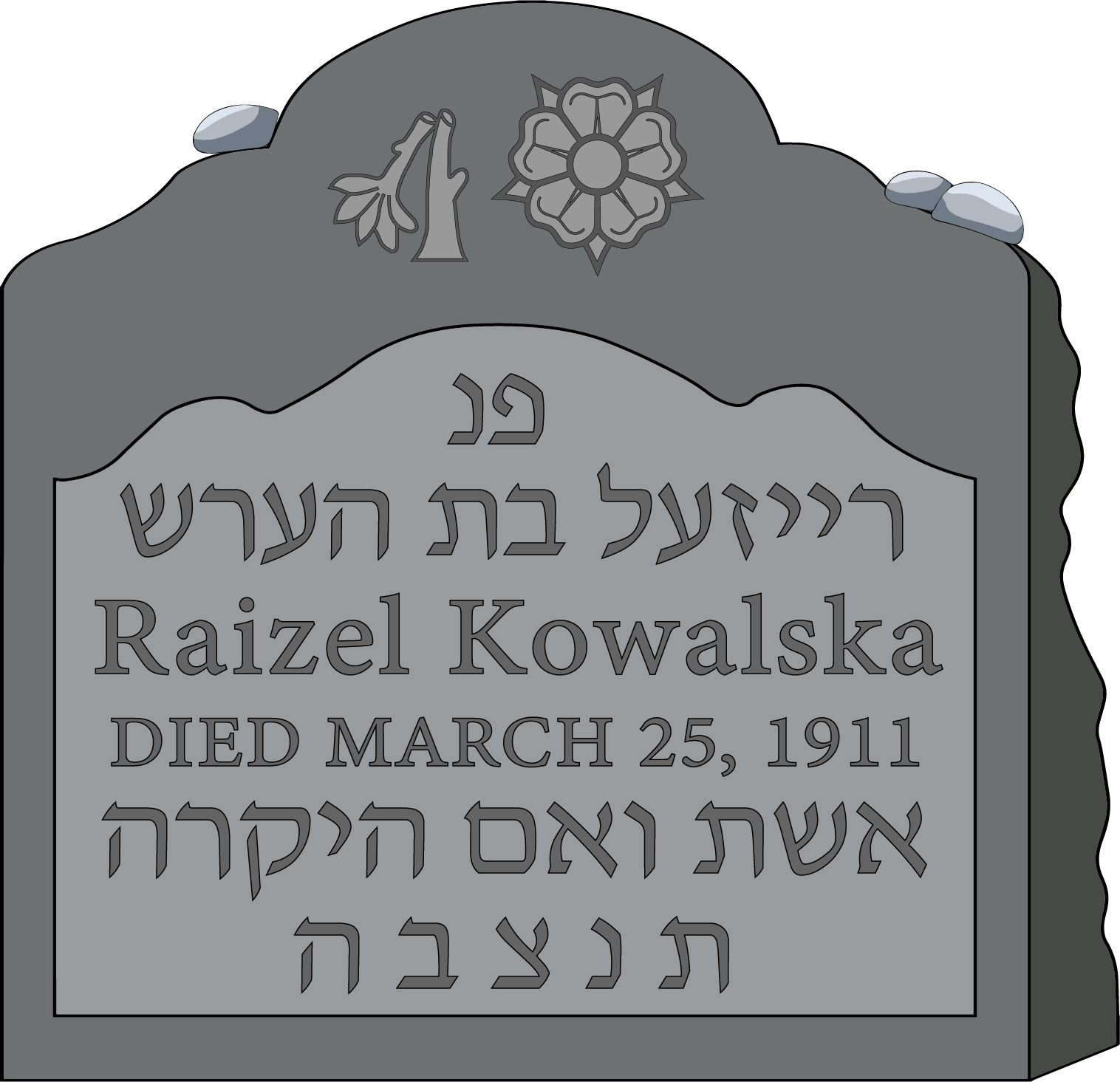
None of it felt real. Not Mame's death, not the way her body had been one of dozens stacked carelessly like a pile of wood outside Bellevue, not the way it had taken three days for Tate to identify her body and bring her back home, not the blackened skin and snapped-off fingers of what had once been his mother.
Her body was inside the shroud, but it wasn't Mame. Not anymore.
He could hear the rest of the burial procession join for the chorus, their voices mixing in with Jakub’s and Józef’s and Tate’s. “Y’hei sh’mei raba m’varach l’alam ul’almei almaya.”
May His great name be blessed forever and to all eternity.
It was raining. He could hear the steady drum of raindrops as they fell from the sky landed on the earth.
May there be abundant peace from heaven and life, for us and for all Israel. And let us say, Amen.
It was raining. His feet were wet as water inched its way through the seams of his shoes, drop by drop.
By the time the haunting melody of El Malei Rachamim cut through the chilly air, Jakub had run out of tears. He wasn’t sure he could cry anymore.
God, full of mercy, who dwells above.
“Al mekomah tavo v’shalom,” the rabbi finished, as that white, white shroud was lowered into the ground.
Jakub hoped that Mame had peace now.
Tate picked up the shovel.
The first scoop of dirt went into the hole with the shovel upside-down. The next, and every scoop afterwards, right side up.
Then it was Józef’s turn.
Then Jakub’s.
It was raining.
The dull thud of each clump of earth as it landed on the linen, no longer white but wet and streaked brown with mud, made Jacob flinch.
Thud.
Thud.
Thud.
That was when he discovered there were more tears left in him after all..
It was raining. He shivered, and he didn’t know if it was from the cold or the wet or something else.
He wanted to look away. Close his eyes. Focus on the leaf falling from the tree. The line of the horizon, murky and hidden by the clouds. But he couldn't not hear the thuds.
So he stood there, watching and shoveling as Mame disappeared beneath the earth, one thud at a time.
The morning of his bar mitzvah, Jakub woke up and immediately wanted to throw up.
He was going to mess this up, he wasn’t good enough at memorizing to get through both his Torah portion and the haftarah, let alone deliver a drash. Tate was even going to take the morning and part of the afternoon off from work and his pushcart in order to watch Jakub be called up for aliyah for the first time.
Józef, already awake and attempting to blearily shave with cold water from last night’s washbasin, muttered, “If you throw up on the bed, you’re the one doing laundry tomorrow.” He hissed as the razor slipped and opened up a thin line along his jaw, then splashed more water over it and walked over to Jakub. “I can do this, I know you can. Come on, get dressed, now – can’t have you being late to your own bar mitzvah. Tate will be waiting for us at shul.”
Jakub swept a tallit over his shoulders and carefully wrapped tefillin around his arms for the first time. Tate had worked extra hours, and Józef, too, as a newsboy after school, to buy him his very own set.
Tate said, “Baruch she’petarani me’onsho shel zeh,” over him. Then, he quietly whispered in Jakub’s ear, “Your mother would be so proud if she could see this.”
Jakub recited the Torah portion – the red heifer and and the deaths of Aaron and Miriam and Moses striking the stone and the battle against the Ameleks and the final great battle against the Emorites before entering the land of Israel.
He chanted the haftarah about Jephthah, someone once shunned, but then regained his rightful place in battle.
He managed to not drop the Torah scroll, the yad stayed where it was supposed to and didn’t jump any lines. He even got through his drash, which Józef had helped him write, without stumbling over his words or skipping any paragraphs or wandering off topic because he had forgotten what he was actually supposed to say.
And as Tate and Józef lifted him up in a chair for the hora dance, it really sunk in. He hadn’t messed this up. He was a man, now.
Tate never came home for Shabbos supper one Friday night.
Jakub could count with the fingers on one hand the number of times he would see Tate on any given day, or even a week, sometimes, but Tate was always home for Shabbos supper – even if he had no choice but to be back at work the next morning.
Józef, home from classes with a few hours to spare for supper before his ferry shift, went out to look for Tate – telling Jakub to stay home in case Tate was just late.
By the time Józef came home, Shabbos supper had long since ended and most of the other tenants had either gone to bed or left to work a night shift. Jakub couldn’t sleep, though, so he sat outside in the hallway, using his hand to brush as much dirt away from the wooden floor as he could before sitting down with a textbook.
Final exams were in only a few months, and eight grade meant the end of elementary school. The only thing after that was high school, and then after that, university. Jakub wasn’t sure he felt ready for high school, but he had to go.
Brandywine. Great Meadows. Lundy's Lane. Antietam. Buena Vista.
Battles and wars and dates and dots on a map and letters on the page swam and blurred together in his head. Who won and who lost, which side fought for what cause. Every time he lost track of which battle had been part of what war, he made himself start the recitation again from the top of the list.
Everyone was talking about the telegram and whether America would enter the war. Tommy Meehan said joining the war would be stupid and that the president was smarter than that, but Jakub wasn’t sure what he thought. The last letter that had made its way to them across the Atlantic had been over a year ago, before Germany had occupied Poland. Tate and Józef had sent several letters since, but there had been no reponse. No answering letter had made its way west back to them. For all they knew, their letters had never reached the shtetl in the first place.
The tsar wasn't in charge of Russia anymore. Jakub didn't – couldn't, really – believe it, but that was what all the papers said. It was weird to imagine, the tsar not being in charge. The tsars had been in charge of Russia for hundreds and hundreds of years. No one knew what was happening now, and maybe that was why they never got back responses to their letters.
Jakub had asked Józef whether he thought America should join the war, but he had just smiled and turned the question back around, asking, “Well, what do you think, Jacob?” Tate had just shaken his head and not answered.
A rat scurried across the hall, disappearing into the shadows, with a mouser in hot pursuit. He wished the cat better luck with supper than he had had – he had tried to eat, but every mouthful of food he swallowed just sat like a stone in his stomach until, four bites in, he had pushed away his plate.
Footsteps echoed up the narrow stairwell.
The moment Józef walked through the door, Jakub knew what he was going to say before a single word could cross his lips. The look on his face said it all.
Even before Józef opened his mouth to speak, Jakub could hear himself say, “Barukh atah Adonai Eloheinu melekh ha'olam, dayan ha’emet.” His voice didn't sound like his own, like the words were coming out from someone else's mouth. Someone standing in a room far away and distant.
But Józef said it out loud anyway. Maybe he needed to speak the words to make them truth.
Józef’s voice shook.
Tate was never coming home.
People said that Tate had collapsed walking home from the tailor’s shop – walking because walking cost less money than taking the trolley.
It had taken over half an hour for the hospital to be sent for and the ambulance trot to his side. By the time the doctors finally arrived and checked him over, all they could do was shrug and declare that he had died of a stroke right there in the street.
"Nothing could have been done," they said.
"May his memory be a blessing," people said.
Tate had left this world as Shabbos had entered, and Jakub hoped that meant he would finally find some rest.
Tate was dead, and blessed was the true Judge.
On Sunday, Jakub and Józef once more boarded the ferry alongside the men from the chevra kaddisha and sat in silence as it made its way across the Upper Bay.
Once more, they tore their clothes.
“Yitgadal v’yitkadash sh’mei raba.”
Once more, they recited the Kaddish.
Blessed and praised, glorified and exalted, extolled and honored, adored and lauded be the name of the Holy One.
Once more, they sang El Malei Rachamin.
Grant prefect rest under the wings of Your Presence
“Adonai Hu na’chalatah, v’tanuach b’shalom al mishkavah.”
Once more, they buried a parent.
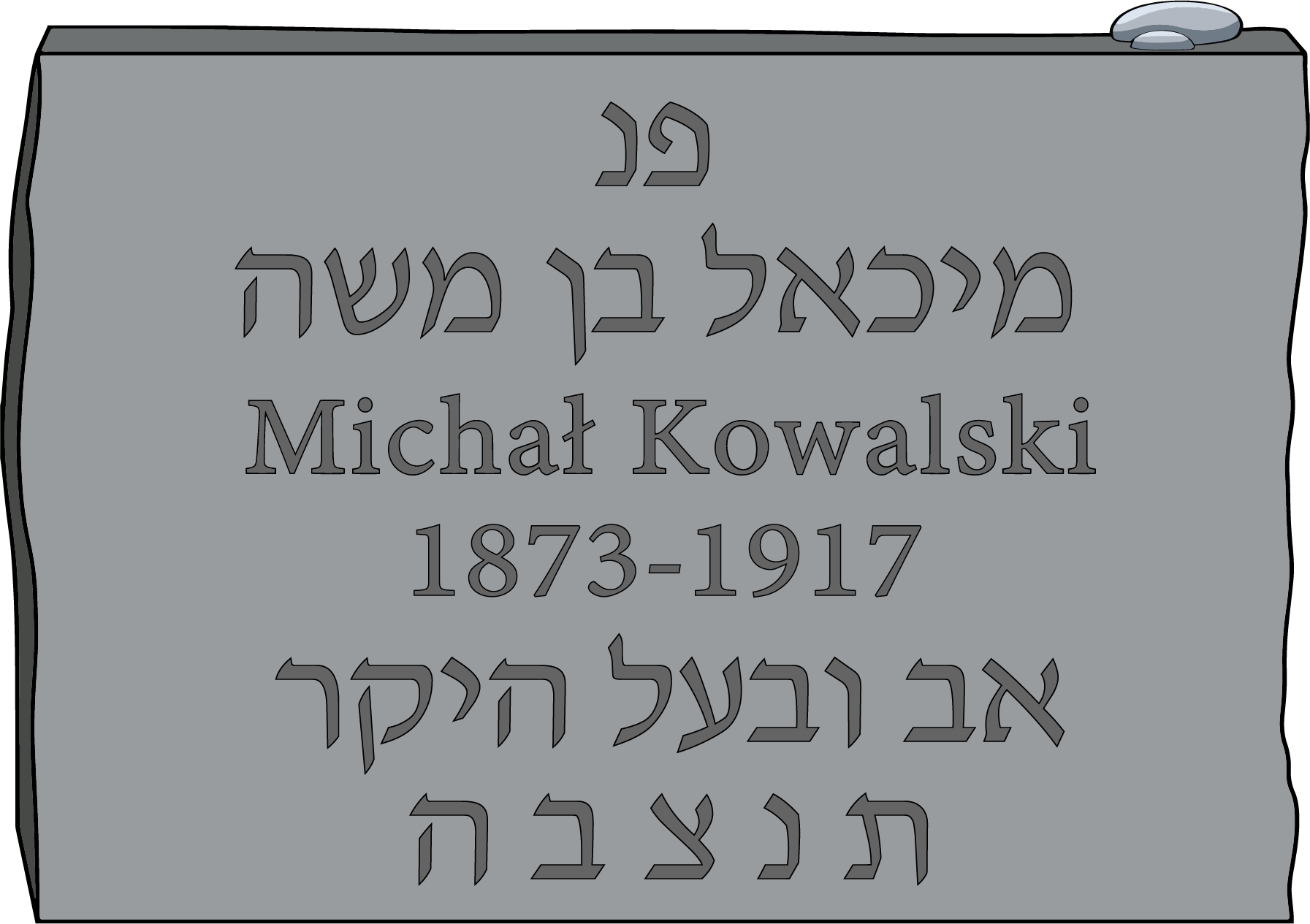
Once more, they left stones on a grave.
Once more, they sat shiva.
Once more, neighbors brought them food.
Once more, they wrote a letter telling of a death and sent it east.
And on the sixth day of sitting shiva for their father, America entered the war.


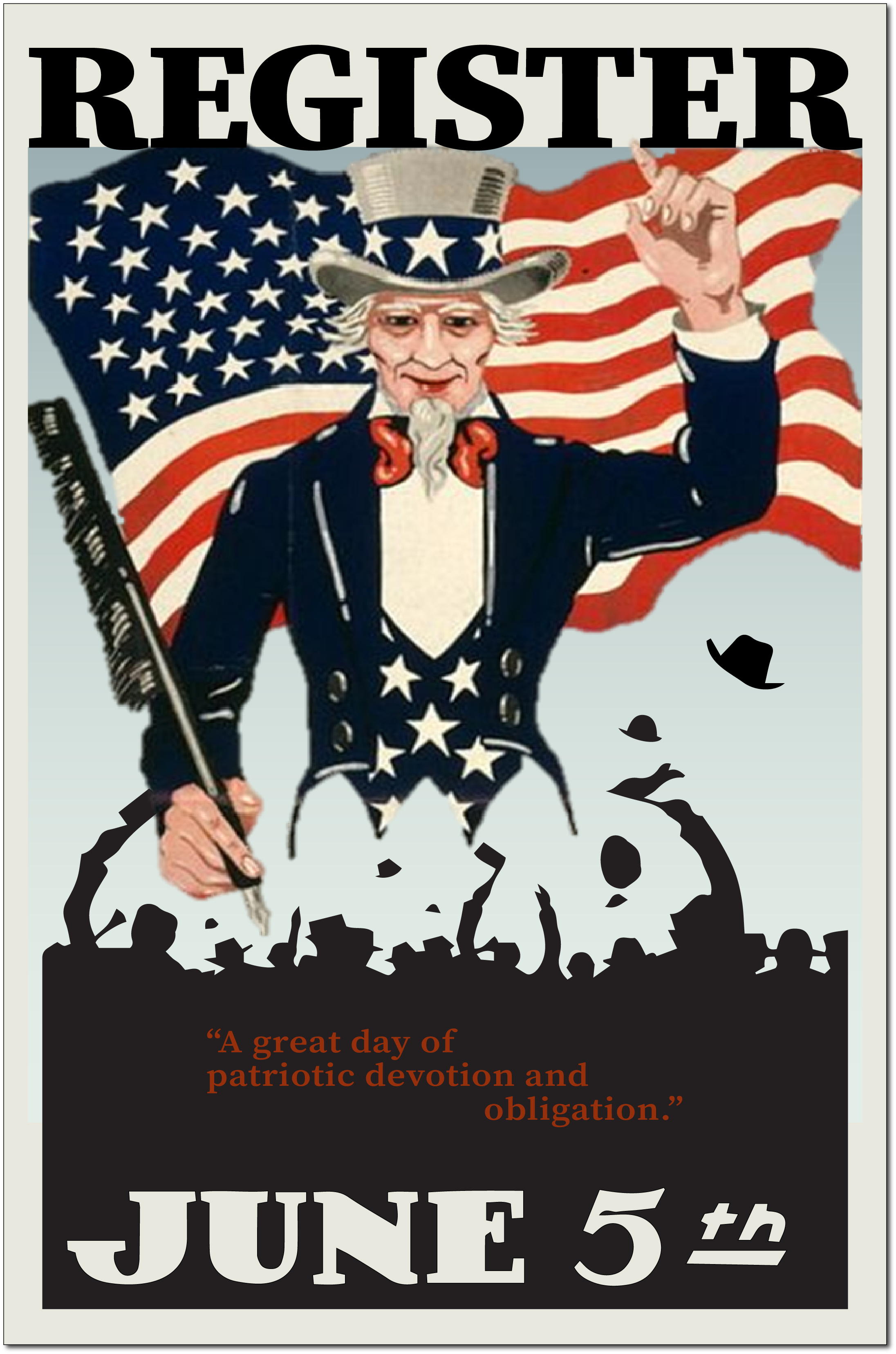
The posters were everywhere. Plastered on every brick wall, around every corner, printed on the front of every paper – the Tribune, the Sun, the Times, and more.
Jakub saw them everywhere he went. On his way to school. On the way back. Printed on the papers he stood on a street corner selling after school. Pasted in the alleys as he ran errands for Mr. Schimmel. Sometimes, he thought he saw them even in his sleep.
They were in English and Yiddish and Polish and Russian and every other language he had ever heard of. Giant, blocky letters that snatched the attention of anyone who came near.
And before Jakub knew it, two months had gone by.
Two months without Tate. Two months of just him and Józef.
Jakub worked every minute he wasn’t either in school or sleeping. So did Józef. Working the midnight-to-eight ferry shift, he had always done homework during the ferry’s quiet hours so that he could attend classes during the day. Except ever since Tate had died, even when he wasn’t in classes during the day, he was working.
Jakub wasn’t sure when, or if, his brother ever slept, anymore.
He walked with Józef, still dressed in his uniform as a ticket agent, to the polling place the morning of June 5th. The air was cool, a faint fog just now disappearing from the streets, and the air heavy with the promise of rain. They didn’t talk much, other than for Józef to quiz him on some mathematics he had been struggling with. Final exams were next week.
Józef walked in through the doors and Jakub watched him disappear into a stream of men as the doors closed behind him. Then he continued walking up the street towards the school building.
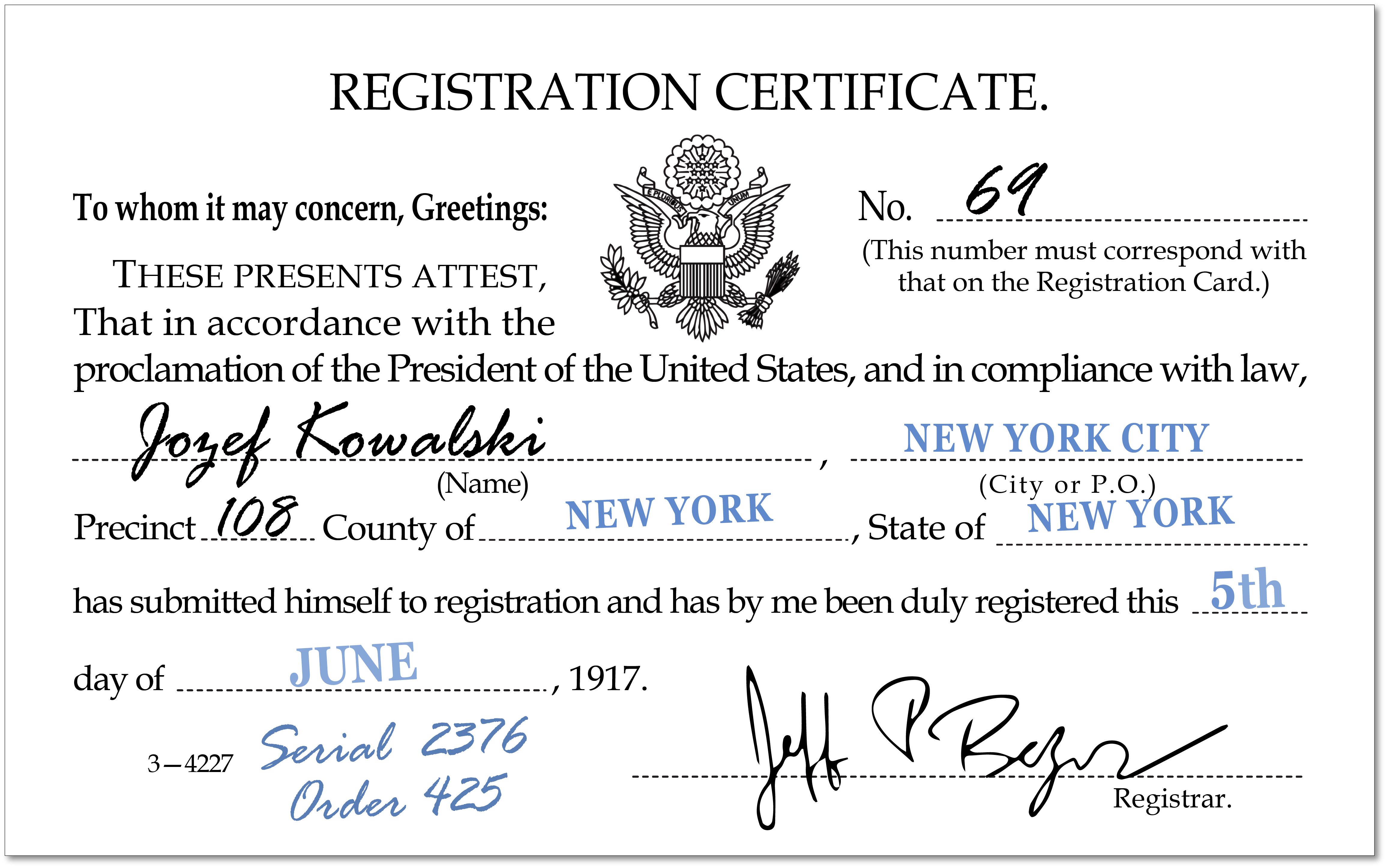
When he came home from school that afternoon, mathematics still no clearer than it had been that morning, there was a card sitting in the box that separated Józef’s possessions from the belongings of the other dozen boarders who shared their tenement.
Another month went by. The newspapers got louder and louder, the pictures and letters angrier and angrier. Anyone who dared to speak German now received dark glares, if not worse.
A letter came. Jakub was the one who opened the envelope because who knew the next time Józef would be home.
He folded it back up and placed it carefully in the lining of his jacket. He didn’t know exactly where Józef would be right now, and this didn’t seem urgent enough to run across the campus shouting, “Józef! Józef Kowalski!” But he did know where Józef would be come midnight.
In the meantime, he had to work.
A ticket for the ferry cost a dime. A dime could buy a lot. An afternoon at the movie theater. A towel and small bar of soap for a fifteen-minute shower at a public bathhouse. A snack-sized Frisbee pie. Ice chunks for the ice box. Two donuts, ice-cream cones, or cups of coffee.
A quarter pound of chicken. Half a pound of onions or cabbages. A pound of bread or potatoes. A quart of milk. Three eggs.
Food cost over twice as much as they used to even just a few months ago. No one on Orchard Street could afford a Shabbos chicken these days. There were riots. Hundreds and even thousands of people marching up to City Hall demanding food. A rich motorist had driven into a crowd, injuring hundreds.
And once a week, Jakub used one of the dimes he earned, the ones that weren’t needed to pay for rent or food, to buy time with his brother.
He wasn’t supposed to, but ever since Tate died, sometimes boarding the midnight ferry was the only time he really got to spend with Józef anymore. Sometimes he got off the ferry after just one trip the way he was supposed to. Other times, he would sit next to Józef and listen to him talk about history and philosophy and the law as he worked on assignments – until he fell asleep, lulled by the swaying of the ferry, and only awoke the next morning up at Józef’s gentle shake.
No one seemed to mind much on the handful of occasions he did that.
This evening, Józef just raised his eyebrows when he came around the corner and Jakub handed him his ticket to for inspection. “A, vos iz gevorn?”
Jakub had fallen asleep on the ferry just the previous night, after all, and he rarely boarded he midnight ferry more than twice a week. He shook his head and said that nothing had happened, that he could wait. He waited for Józef to finish his rounds on the ferry, checking the ticket of every passenger and issuing tickets to passengers who hadn’t bought one before boarding, before he handed him the letter.
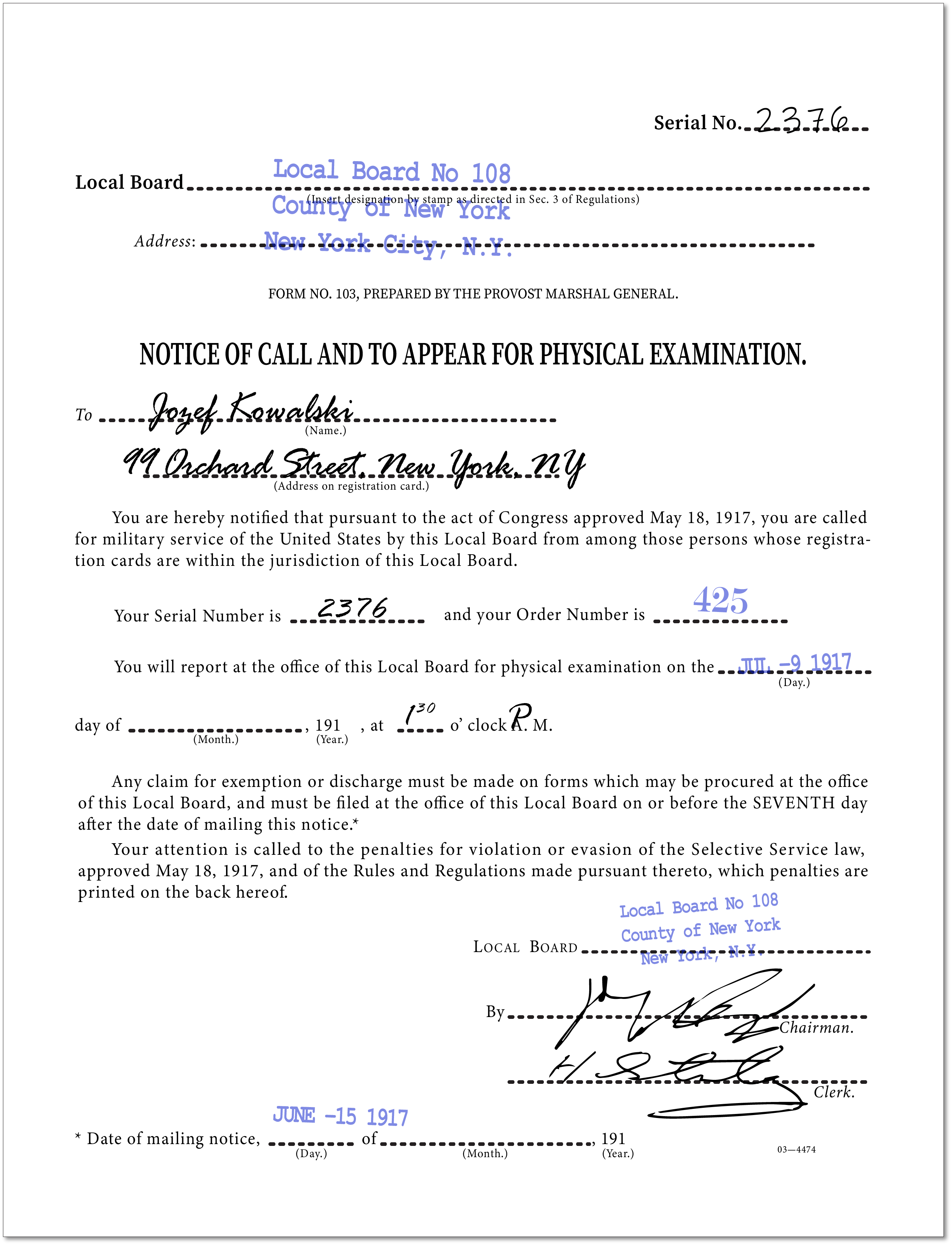
Józef took the letter and read it, his face carefully blank.
“Hey,” he said gently after a moment. “This is just an exam. Nothing’s happened yet, I promise –” Józef cut himself off and turned his ticket stamp over in his hands a few times before continuing on, more carefully this time. “Look, I’ll bet that loads of people got this same letter. Worrying about it right now would just be making an elephant out of a fly.”
Jakub stared back at him warily, but Józef held his gaze steadily until Jakub had to blink and look away. He sat down on the bench next to Józef, leaned against his shoulder, and watched the stars’ reflections glitter in the water. “So what were you saying yesterday about trees and poisonous fruit?”
Jakub passed his eighth grade final exams and graduated.

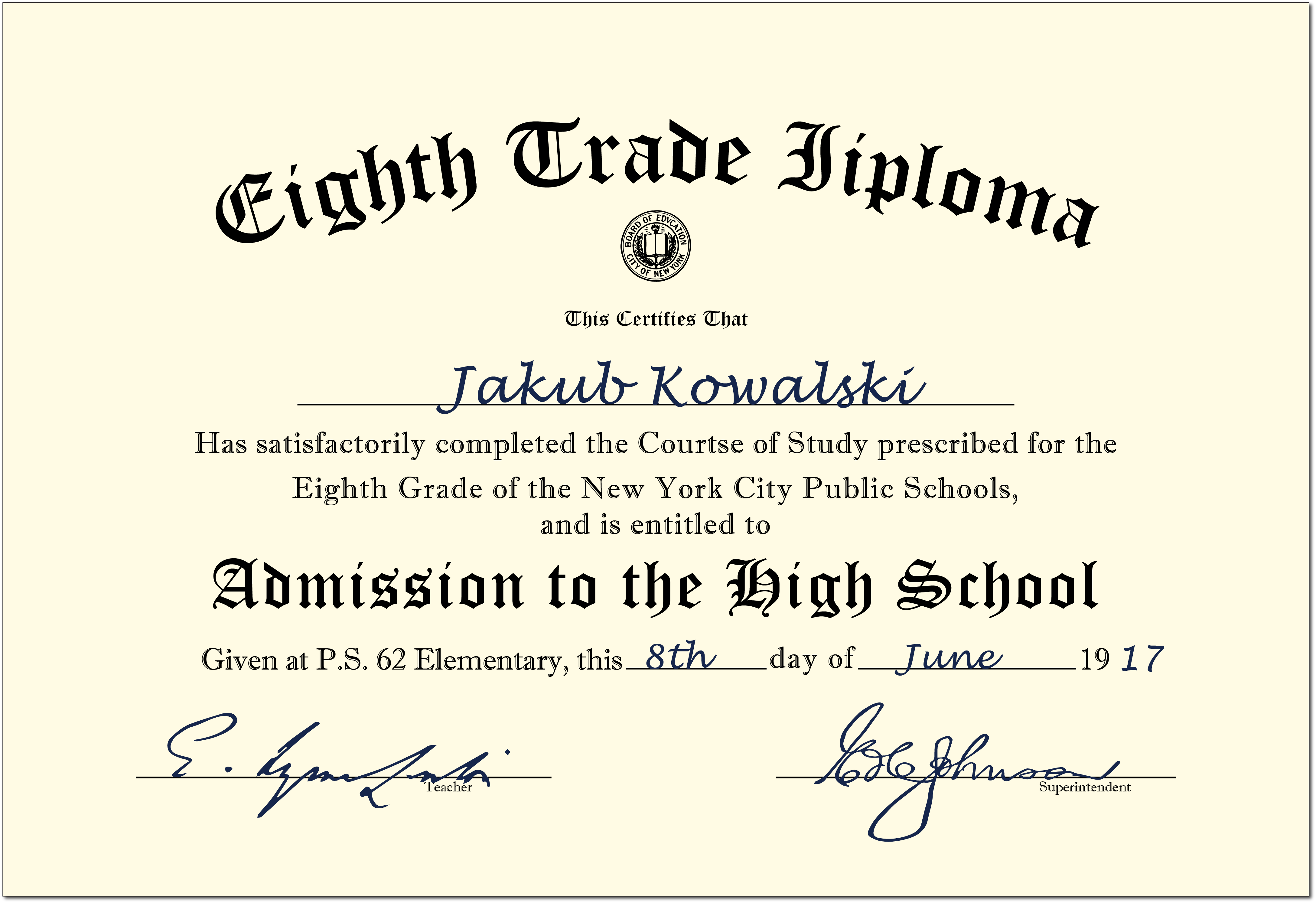
Józef took precious time off from both work and his own studying for final exams to attend his graduation. The two of them shared an apple strudel together in celebration as they sat on a park bench overlooking the East River, careful not to waste even a single crumb. “Mame and Tate would be proud, if they were here,” Józef said.
Jakub wasn’t so sure. Józef was the one to be proud of, in college and on his way to law school. Jakub was just…himself – too gawky and slow and clumsy and stupid, especially with his books. But he let himself believe it anyway.
It was nice to imagine his parents being proud of him, even if it wasn't true.
With school over for the next few months, Jakub worked. They always needed money, and food prices kept increasing. He started to be paid to put posters up on alley walls and by market squares - everywhere where people might see. The country was at war now, but no one was sure exactly what that meant just yet, other than that food was more expensive now.
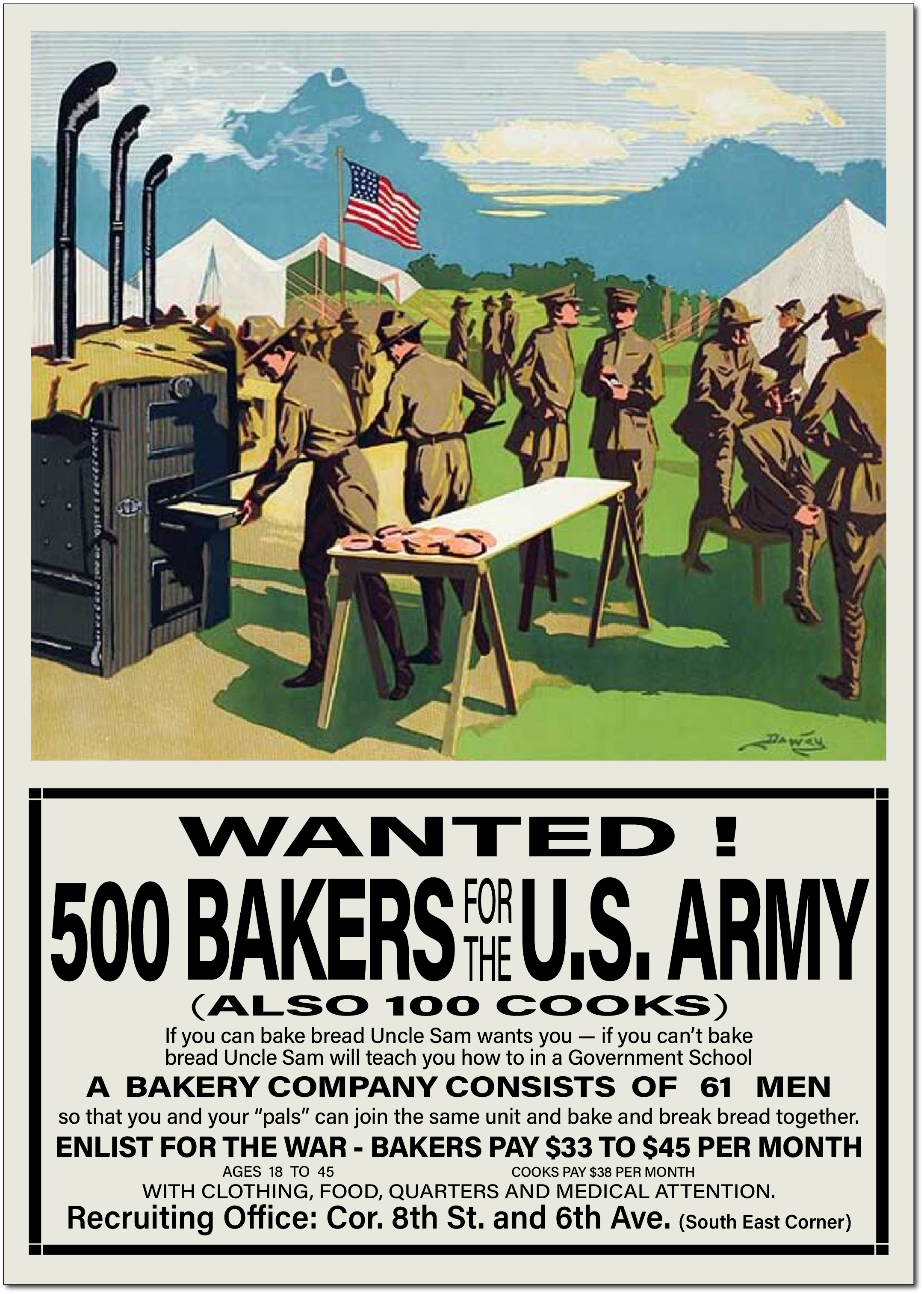
Some mornings, he would wake up before dawn to help Mr. Schimmel with the morning baking, and earned a few dimes for the trouble. He would have paid to learn how to bake properly, except they didn’t have money for any shtuss thing like that anymore. Paying money to learn how to bake? He could just see Mame and Tate shaking their heads in disapproval at that. College was one thing, something worthy to stash dimes and quarters and even dollars away for – but baking?
Other afternoons, he ran around the neighborhood, selling rooms. He’d find one room – or, well, spot on the floor, really – selling for twenty-five cents, run around the neighborhood until he found someone that was willing to pay fifty cents for it. And then he would take the fifty cents he earned from that trade and find someone selling a room for fifty cents – then find someone else willing to pay a dollar for it.
Then another letter came, and everything changed.
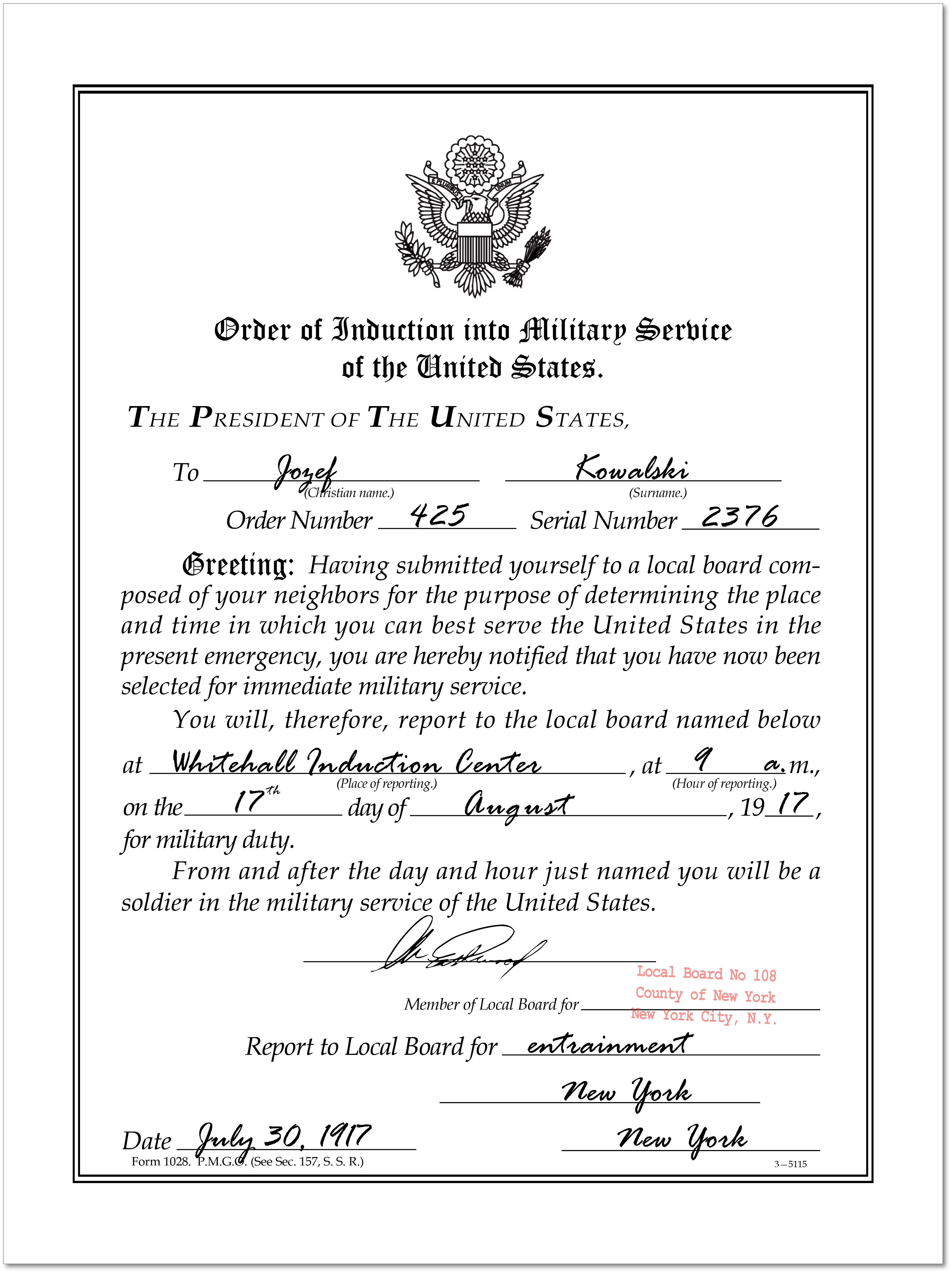
Jakub and Józef fought.
He pleaded with Józef to not go, that he didn’t have to listen to this piece of paper, that he could just pretend the mailman had lost it or something – or even that a rat had knocked a pitcher of water on the paper and made it unreadable. The rats in the city were big enough to do that.
Józef sighed, rubbing a hand over his eyes. “Mame and Tate brought us here for freedom, Jacob – for something more than what we had back in the old country. I was called on to help defend that freedom, and I won’t shirk that and run away from what they’re asking.”
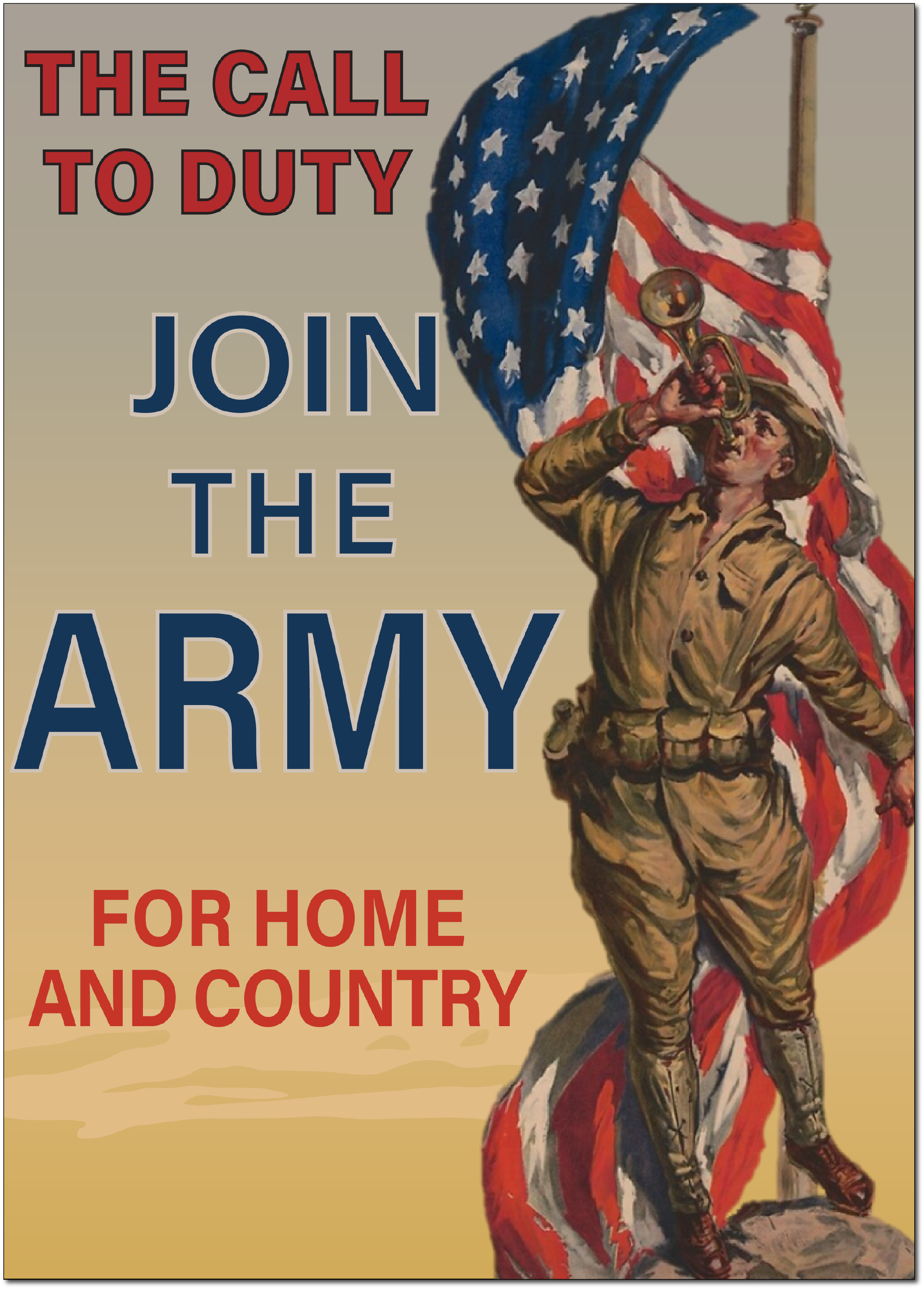
“Fine! Then I’ll join the Army, too.” He had no idea why or how those words came out of his mouth, just that he wanted, more than anything, to go with Józef. To not be left behind. “They need bakers – I saw a poster! I can join the Army and then we’ll have twice the money. I’m not cut out for school anyway.”
Connor Farrel was only fifteen, and everyone knew how he had stolen his older brother’s birth certificate and ran off to join the Navy just last week. If he could do it, then so could Jakub. Except for the lying part. But there were papers, he knew, that let boys enlist. All Józef had to do was sign them.
Józef whirled around, eyes blazing and his voice sharp. “You are not going anywhere – not to the Army and you’re not quitting school, either. Do you hear me?”
Jakub looked at his brother, really looked. Józef needed a haircut, his beard was awkwardly shaven, half stubble and half clean, and there were dark circles under his brown eyes. Tate’s eyes.
He flinched.
Józef’s voice softened a bit and he sat down, sighing. “The money I earn will be enough to pay for rent and food while I’m gone, okay? You’re going to be fine, Yankele. Don’t make me worry about you, alright? I don’t need you in the Army and the Army doesn’t need you – just stay here and go to school and be safe. That’s enough, do you hear me? Just that would be enough. Versteh?”
Jakub wanted to argue, he wanted to do anything other than be left behind here, all alone, and start high school without Józef there to help him. Without Józef there to tease him and tell him to mind his books and read his notes out loud when the letters started blurring together.
But he saw the look in Józef’s eyes and the words died in his throat.
Three days later, he stood at the train depot, surrounded by a crowd of cheering and crying and waving family members and friends, as the Army train carrying Józef vanished into the distance.
Józef left for the Army, and Jakub started high school.
The entire country seemed to have been consumed by the war. Poster after poster after poster were everywhere anyone could see. He earned pennies and nickels in return for helping to put up posters around the city before and after school.

Factories had started to hire women to replace all the men who were either being drafted or enlisting. Mrs. Rogarshevsky had taken to working in a munitions factory in place of completing her piecework at home, as had three other women on their floor alone.
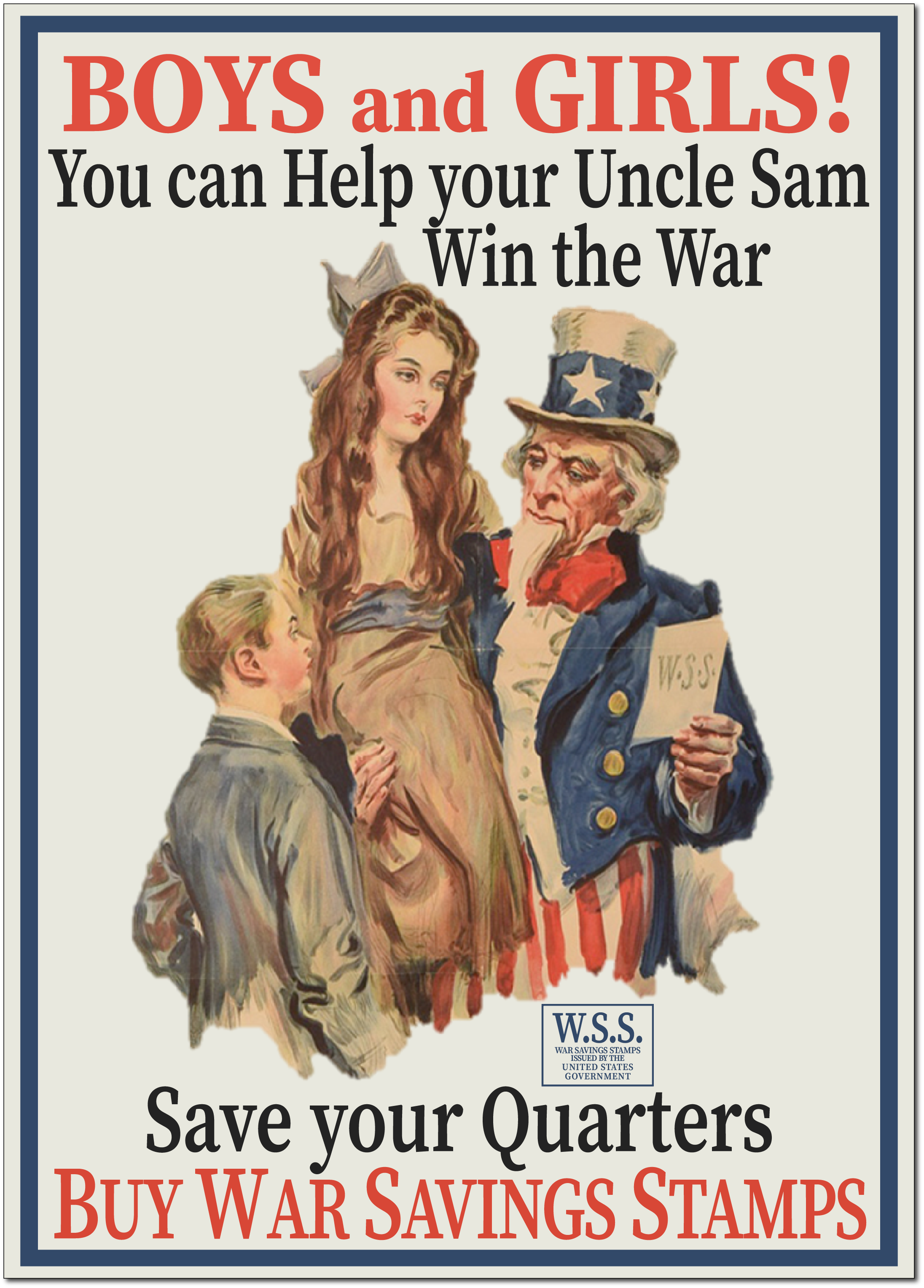
Before school and after school, everyone went around trying to cajoul money from families and neighbors and running small jobs to buy war stamps and liberty bonds with. Twenty five cents for a stamp book that would be five dollars in six years. Liberty bonds were worth more than war stamps, of course, but war stamps were what most children could afford. The principal said that whichever class bought the most war savings stamps would be given a prize and an medal for contributing to the war effort.
Sauerkrauts had become liberty cabbages, frankfurters liberty sausages, dachshunds were liberty pups, and even German measles was liberty measles now – though he thought that if anything deserved the bad association that came with having a German name, it should be the measles. What did the food and dogs ever do to harm anybody? But anything that even sounded German or Italian was scowled at on the streets now, if they weren't pelted with rotten vegetables.

Food was harder to come by now and people got increasingly creative. The words on everyone’s lips were Meatless Mondays and Wheatless Wednesdays so that every ounce of spare food could be saved for the soldiers and sent to Europe.
Even bread became an increasingly rare treat that was for Shabbos and holidays only.
At school, it was their duty to tend to the school garden now – filled with carrots and onions and potatoes and beets and other vegetables. Some families even had their own garden at home in order to help the war effort. Weeding was done before Algebra. Watering during lunch. Jakub and the other children in their tenement had tried setting out a small box filled with soil and seeds on the fire escape to grow their own garden, but all the plants had just withered and died while they were still just tiny little sprouts.
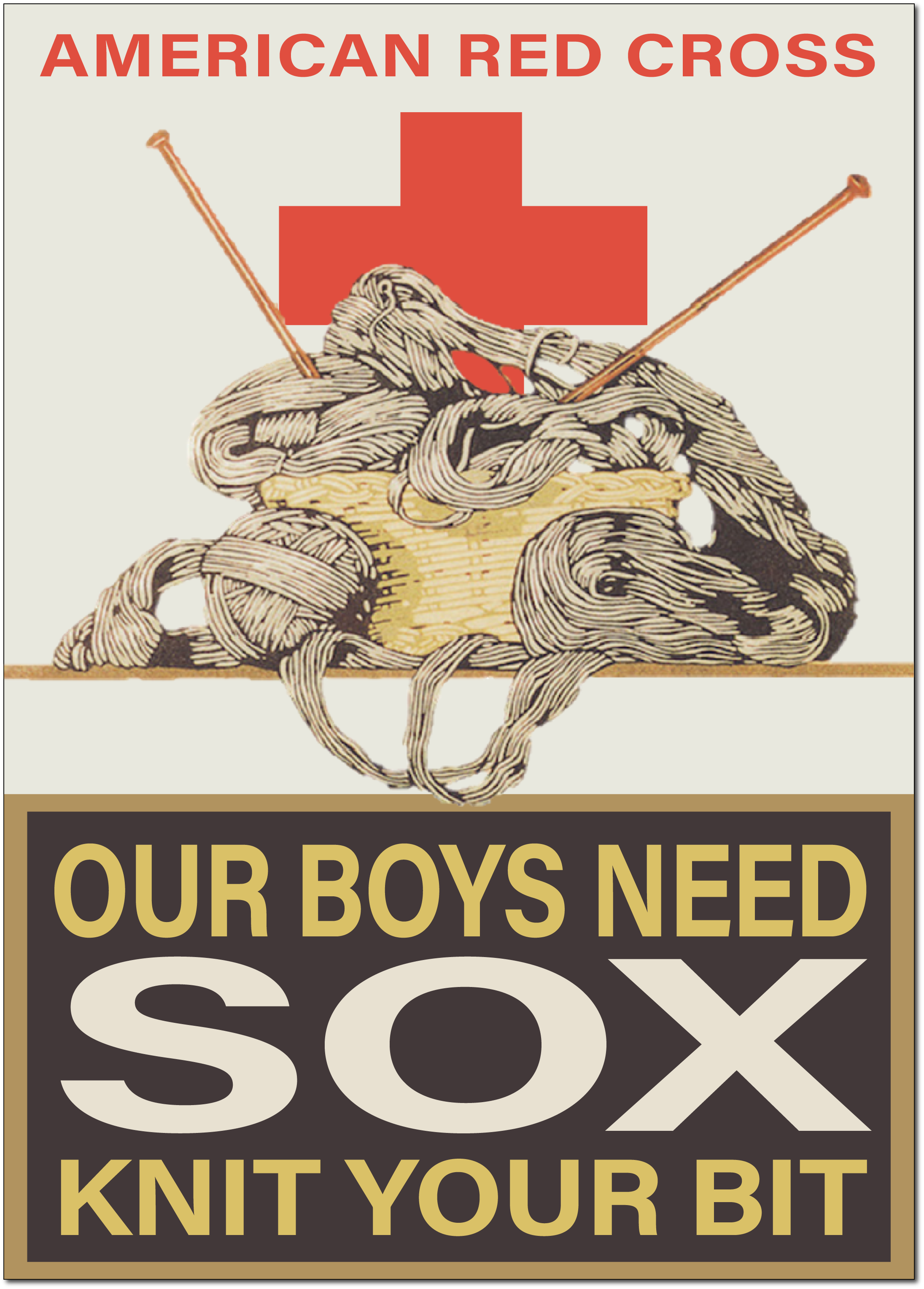
And there was the knitting – an absolutely endless pile of knitting. Everywhere you turned around, someone was knitting. Before school, there was knitting. During lunch, there was knitting. On the trolley, someone was knitting. At school, they learned how to knit. On the weekends, the city gathered people in Central Park and hosted knitting parties. Everyone knit – women and girls, of course, but also men who hadn’t joined the army and boys. The girls at school had had much fun teaching the boys how to knit. Old sweaters were unraveled so the yarn could be repurposed into sweaters and socks and scarves for the soldiers. From dawn to dusk, people all over the city were knitting. White stripe for small, blue for medium, red for large.
Fewer and fewer people were in school, especially the boys. So many people, so many other students, had taken factory jobs or even gone to enlist. The recruiters didn't check the ages as long as you looked almost-right, and if they asked whether you were over eighteen, you just placed a piece of paper that had the number eighteen written on it and tucked it into your shoe. You were standing right on top of it, so you were over eighteen.
Even with all the hustle and bustle and the frenzy of the war effort, though, Jakub was lonely.
Sometimes, on the weekends, he could take a train to visit Józef at the training camp – or else Józef would come down and visit him. It was huge, nearly an endless maze that was somehow more confusing than the city, for all that the city was much bigger. They would talk, Józef would ask how everything was going and whether there was enough money, and Jakub would try to ask him if he was having any fun in the Army. But that cost money, and even with Józef being the in the Army and them breathing easy about how they would pay for food and rent for the first time since Tate died, it still wasn't something he could afford to do every weekend, with him in school and unable to work full time.
It still wasn't the same, anyway. Visits, instead of living together.
Jakub missed his brother – missed seeing him almost daily, instead of letters and visits maybe once a week. Missed having someone that he could ask whenever something at school was too hard, or he was being too slow to learn. Though really, it hadn’t been like that ever since Tate had died, but at least even then, Jakub knew where Józef was and had the comfort of knowing that he would come home. No matter how late into the night he had to work, Józef had always come home.
And now he was all the way over on Long Island, what felt like another world away.
Józef got passes to return home for Rosh Hashana and Yom Kippur and even Chanukah, and it felt like a little piece of his family had made its way back to Jakub.
But it still wasn’t the same.
Józef came home for the Seder, all kitted out in his neatly-pressed olive uniform. He joined in and laughed as they recounted the Haggadah and made a face at the maror and helped hide the afikomen – in his satchel, as it turned out – for the littlest children to hunt down and cheerfully told stories about life in the Army and his training.
Afterwards, Jakub walked him outside to where he would board his train to return to Camp Upton.
Just before he boarded the train, Józef stopped Jakub – pressing something into his hand.
“This,” Jakub stuttered. “It’s Tate’s watch! And it’s yours. I can’t take it!”
“And I’m giving it to you.” Józef smiled. “The Army has watches aplenty. Take good care of it, okay?”
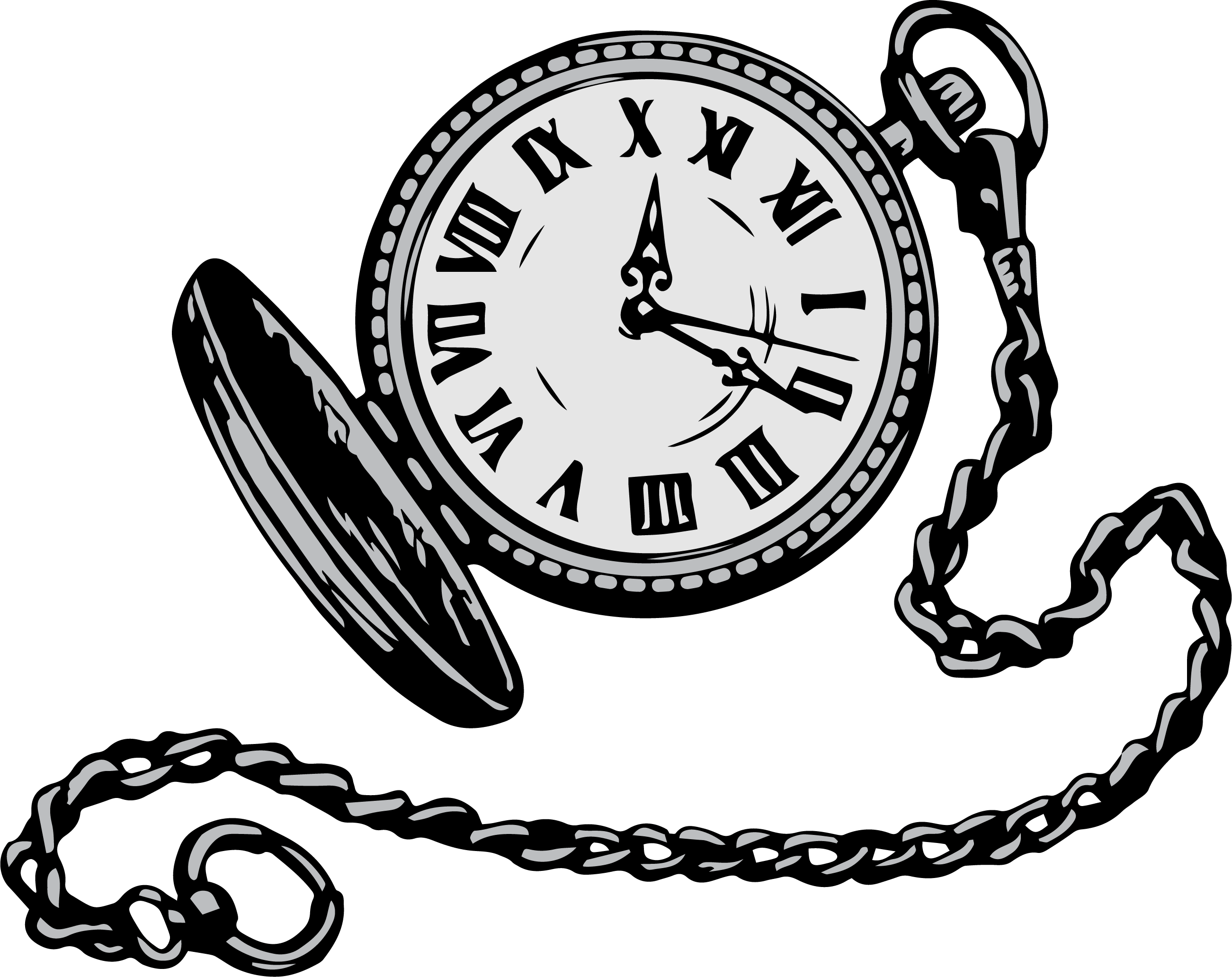
It wasn’t worth much money. Simple pewter, not true silver, but with elegant engravings decorating the outer case. But it was worth so, so much more than the value of the metal. It had belonged to Tate’s great-uncle, who had been a watchmaker in Warsaw and had gifted it to him on the day he married Mame.
They hardly had anything that belonged to their parents. Mame’s ring had been lost in the fire. All they had left, really, was her hand-stitched challah cover, Tate’s siddur with the names and birthdates – and death dates – of all his children written neatly inside the cover, and this watch. Hardly any pictures even existed of their parents. There were no pictures of Mame, and their one picture with Tate was the day that Józef had graduated high school.
That was it. Their entire lives could be packed up in a handful of boxes with emptiness to spare.
“Do you have to go?” Jakub tried not to whine. He knew this war was important, that Americans had to fight, that it was their duty to – but of all the men in America, did it have to be Józef, his brother? Why couldn’t it be someone else? And what he really wanted to ask, "Why can't I come with you?"
Józef sighed and took off his hat, one that looked like the ones that belonged to cowboys at the reels, to run a hand through his hair. “Jacob. We came to this country seeking freedom. Now, it’s my turn to help defend it." He tried for a chuckle. "It can’t be any worse than wandering the desert for forty years, anyway.”
It really wasn't that funny, but Jakub couldn’t help but laugh at that in return and hugged his brother tightly. They were nearly the same height now.
“Take care of yourself, alright?”
Two days later, troop ships left New York Harbor carrying thousands and thousands of soldiers, Józef among them.
Their departure was supposed to be a secret, so it was said – but nearly the entire city knew about the departure and came out to see their boys off. Possibly the burning of all their straw mattresses to the point the plume of smoke was visible even to the city and taking up signs that read, “FOR RENT FOR THE SUMMER. OWNERS TOURING EUROPE,” on their barracks had something to do with it.
Regardless of how the news had gotten out, the streets were alive with waving handkerchiefs, thousands of whistles chirped their greetings, and there was so much cheering and shouting Jakub thought his eardrums would burst.
And there he stood, watching the ships sail out of the harbor until they were nothing but tiny dots on the horizon. He stood there, watching until even those dots disappeared into the sea, leaving nothing behind.
Jakub hadn’t thought it was possible, but somehow it was even lonelier, now that Józef was officially an ocean away.
He tried to keep his attention on school, but the subjects kept slipping from his attention no matter how hard he tried.
He helped Mr. Schimmel with the morning bake and ran errands for him after school and tended the school garden and knitted and collected money to buy war stamps with. But it just didn’t feel like it was enough, not compared to everything else that was going on. Not with Józef gone.
And the posters were still everywhere.
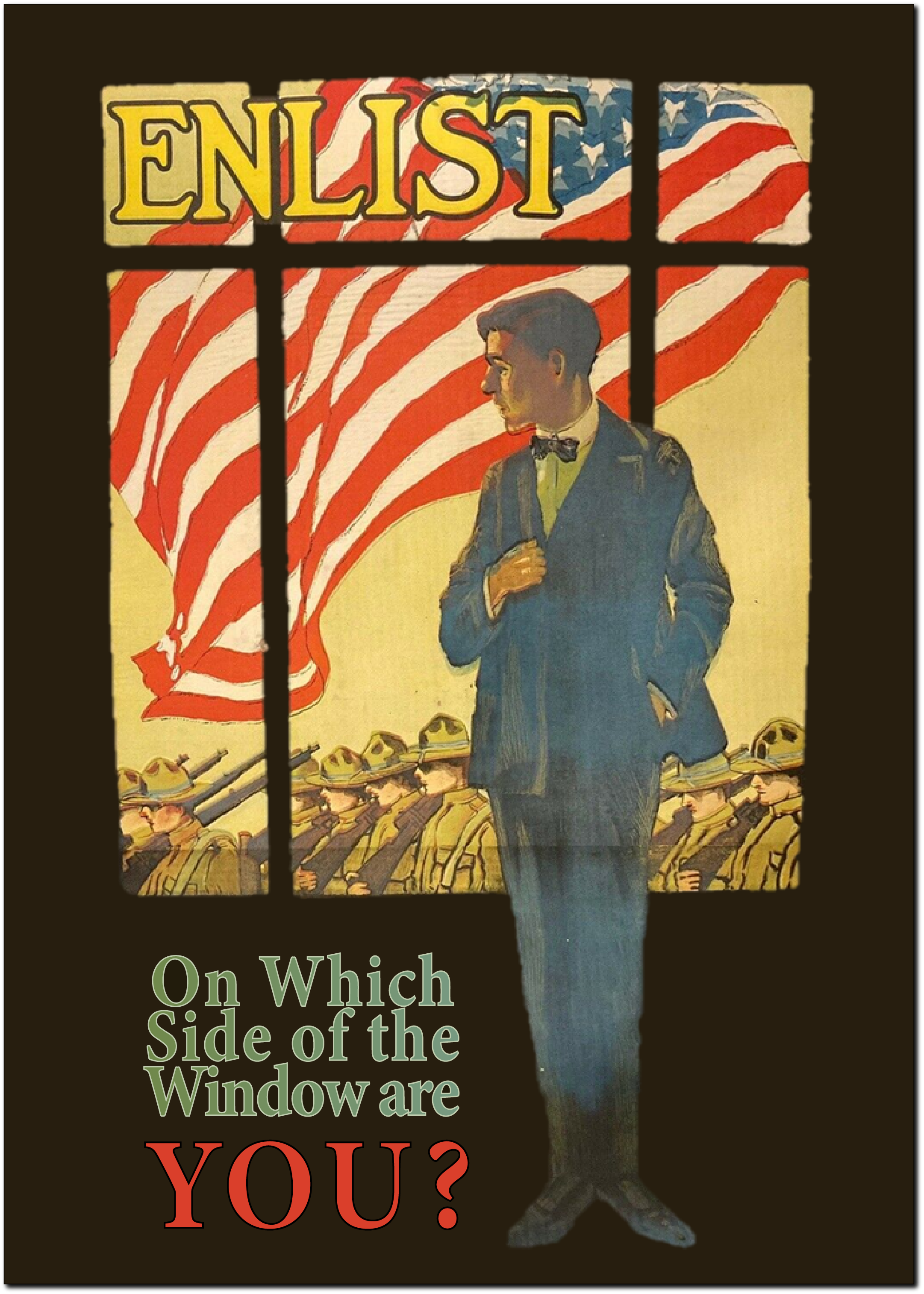

And on the way home from school one day, mumbling formulas and equations under his breath because final exams were soon, one of the posters caught his eye. He stopped right where he stood and stared at it for a long moment, remember the first time ever he had seen the Statue of Liberty. Józef's unit had the Statue of Liberty as their embelm, even. Lady Liberty had been right there on a patch on the shoulder of Józef's uniform, and the shoulders of everyone else that had left with him.
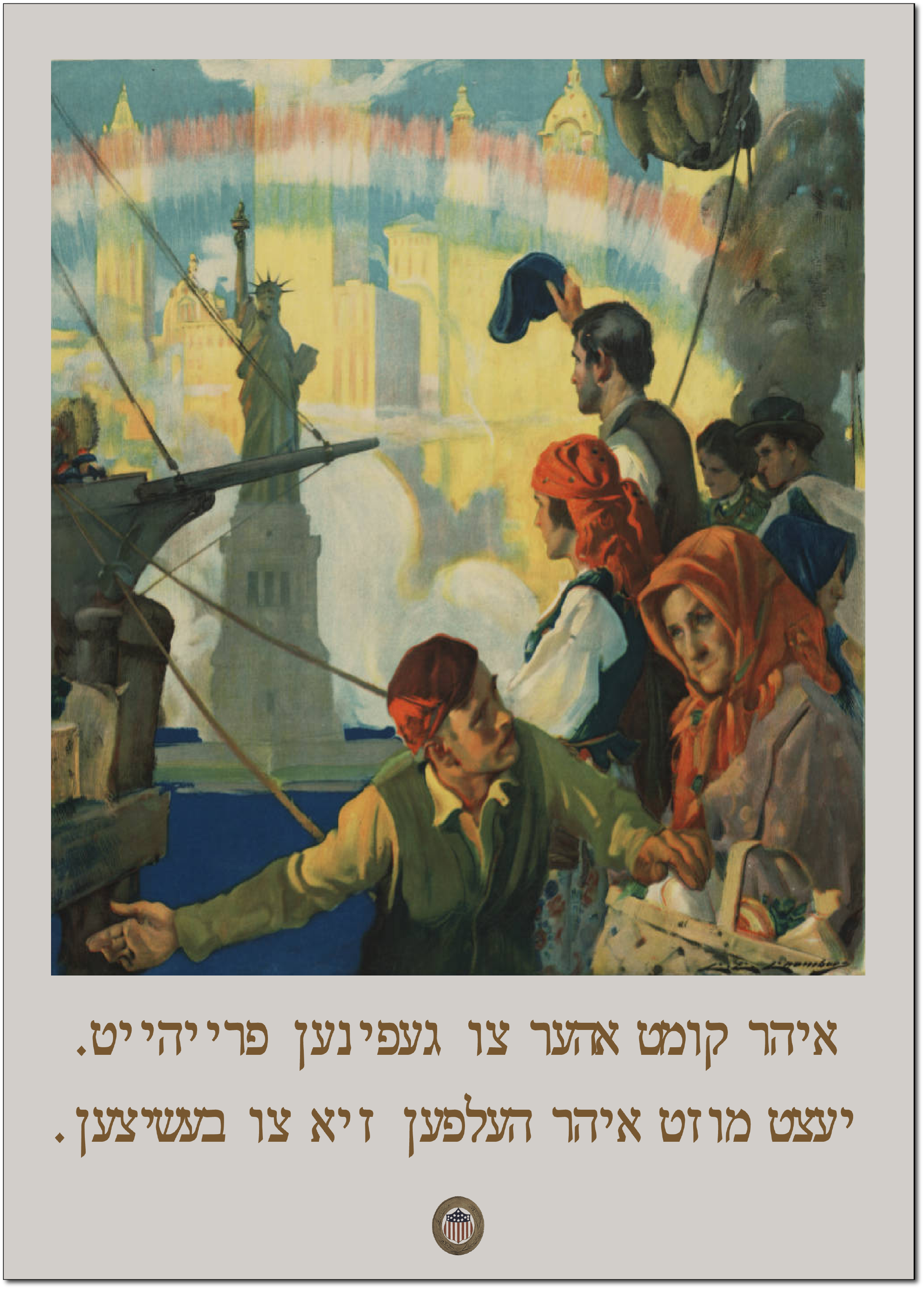
“You came here seeking freedom, now you must help to preserve it,” it read.
The same words Józef had said solemnly to Jakub when he had asked why Józef had to obey the stupid piece of paper telling him to leave. The same words he had repeated just days before his ship left the harbor, bound for Europe.
Jakub hadn’t really meant what he said, he knew that.
All he had wanted was anything else other than to be left behind, all alone, while Józef went off to war. Mame was dead, Tate was dead. Józef was all that he had left, and Józef had left. To serve his country, to do his duty, yes.
But he was still gone.
And now Jakub was all alone and struggling his way through high school. No Mame to help cook dinner with, no Tate to solemnly ask him every Shabbos what he learned in school, no Józef to look over his schoolwork.
He was all alone.
Who cared about mathematics and literature when there was a war? What was even the point of any of it? Trying to get through his first year of high school had been hard enough – and that had been with Józef right over in Long Island, not thousands of miles and an ocean away in Europe. All the knitting and gardening and stamp collecting in the world felt useless, when he knew there was a war on.
Jakub didn't think he could do a second year, not like this. Not all alone.
He sat his final exams the following week and did his very best on them. He owed Józef, and their parents, that much to not quit – in the middle of the school, so close to the end of the school year.
Then the very next day, he walked to the recruiting office with Tate's siddur in hand as proof of his birth date. He didn't know whether the soldier at the office could see through Jakub's carefully tracing with ink to turn 1901 into 1899 – but if the soldier did notice, he didn't comment on it.
Jakub knew there were forms that could be signed to allow boys younger than eighteen to enlist. Joshua Rosen had enlisted that way. So did Teddy Gallagher. But Józef would have never agreed to it, and he was all the way in Europe, beside. He had heard of some boys forging signatures for the form, but he couldn't bear to betray his brother like that.
So he had just gone to the recruiting office and held his breath. If the soldiers there just laughed and told him to return to the schoolroom – well, that would be that, then. He could tell himself that he had tried.
But they hadn't. Only a brusque nod when Jakub squeaked out, "I'm eighteen, sir," in response to the soldier's, "How old are you, son?" His heart had been pounding so hard that he could have sworn there was no way no one else couldn't hear it. But all the soldier had done next was nod, tell him to sign, and then raise his right hand.
"I, Jakub Kowalski, do solemnly swear that I will support the constitution of the United States, that I will bear true allegiance to the United States of America, and to serve them honestly and faithfully, against all their enemies or opposers whatsoever, and to observe and obey the orders of the President of the United States of America, and the orders of the officers appointed over me."
And, just like that, he was in the Army.
Jakub turned seventeen as he was learning how to stab a bayonet through a burlap sack filled with – he didn’t actually know what the sack was filled with. Sand, he supposed. It almost certainly wasn’t flour, not with the wheat conservation efforts.
Every bayonet target had a name, helpfully painted on a little wooden sign, that ranged from Kaiser Bill to Jerry to Hindenburg. Kaiser Bill got the most vehement stabbings.
There were miles and miles and miles of trenches zig-zagging across the camp for them to practice with, and those all had names as well.
He learned how to throw a hand grenade and how to unjam a machine gun. How to don a gas mask in under nine second. The burn of tear gas in his lungs and eyes and nose. How French and British field pieces and howitzers worked. The unforgiving, unrelenting rhythm of the marching cadence.
The men in his training company came from almost every occupation. Factory workers, farmhands, tailors, fisherman, clerks, boys straight out of school not much older than him – it didn’t matter. They all had to train and learn how to work together to win the war.
Every morning started at five forty-five, when the bugler blew Reveille. Everyone hated the bugler, and envied him for his good fortune to go back to bed after rousing them all and not having to wake up until nearly midday. There had even been a song written about it, which they all cheerfully sang.
“Oh, how I hate to get up in the morning!
Oh, how I’d love to remain in bed!
For the hardest blow of all,
is to hear the bugler call.
You’ve got to get up,
you’ve got to get up,
you’ve got to get up this morning!
Some day I’m going to murder the bugler,
some day they’re going to find him dead.
I’ll amputate his reveille,
and step upon it heavily,
and spend the rest of my life in bed.”
Every night ended at eleven, with the mournful notes of Taps.
Weekends were for relaxation. Tickets into the city, for the soldiers, were $1.30 for a round trip. Henry visited him a few times, but he never went into the city on a weekend pass – even as thousands of friends and relatives flooded into the camp every weekend.
He wrote letters to Józef, when he could. He tried to write every day, like he was supposed to – like he would be doing if he hadn’t enlisted. But he was so tired and training was so exhausting that from Reveille to Taps, the moment his head hit the pillow every night, he was instantly asleep until the bugler’s first notes the following morning.
He would either place his letters for Józef in the post box for outgoing mail or hand them to Henry in person when he visited. In turn, Henry would mail the letters for Jakub and mail him the letters addressed to him that were delivered to the tenement from Józef.
It wasn’t enough, though, and every day, whenever he had the spare energy to summon up care, Jakub felt bitter, heaving guilt for lying to his brother.
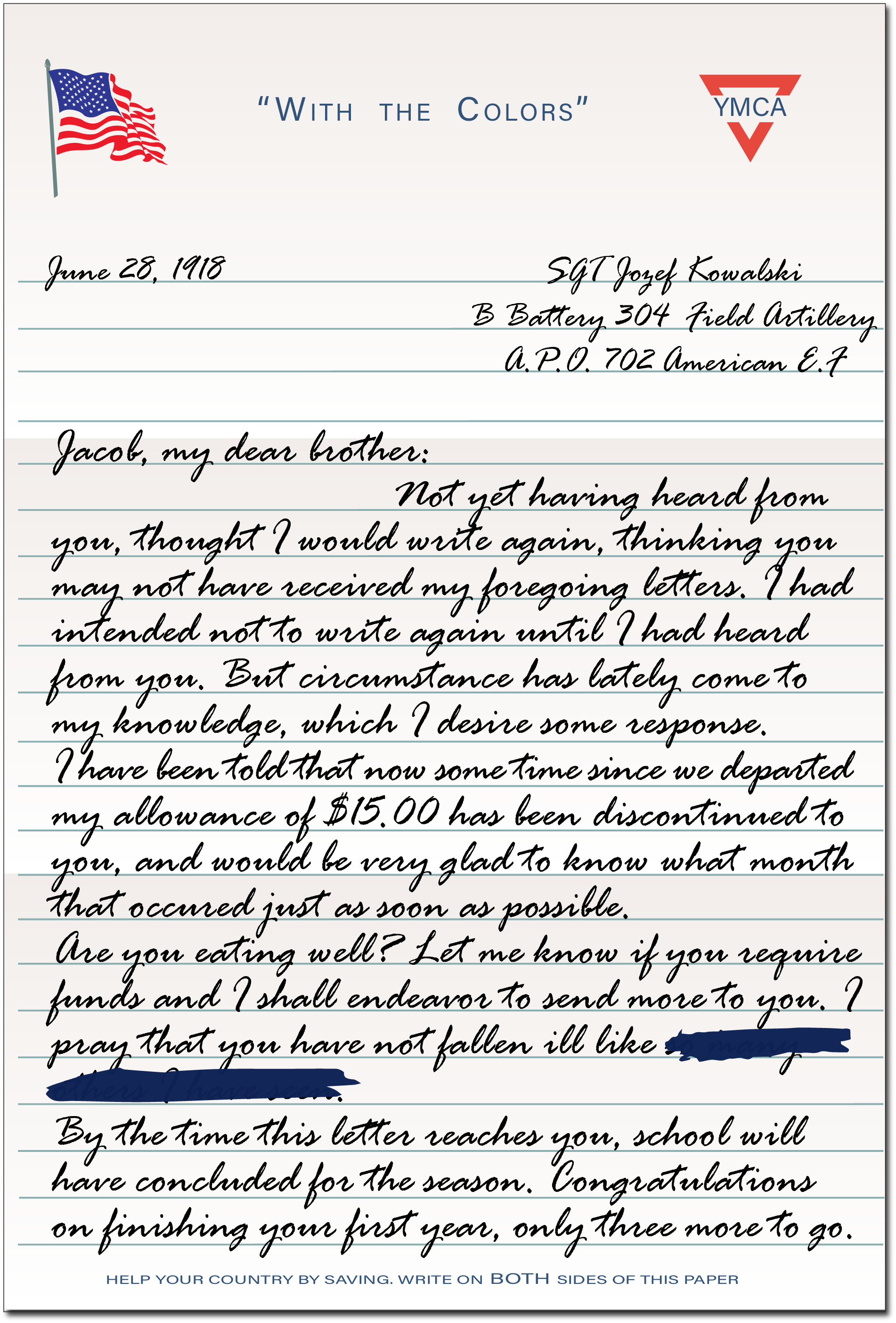
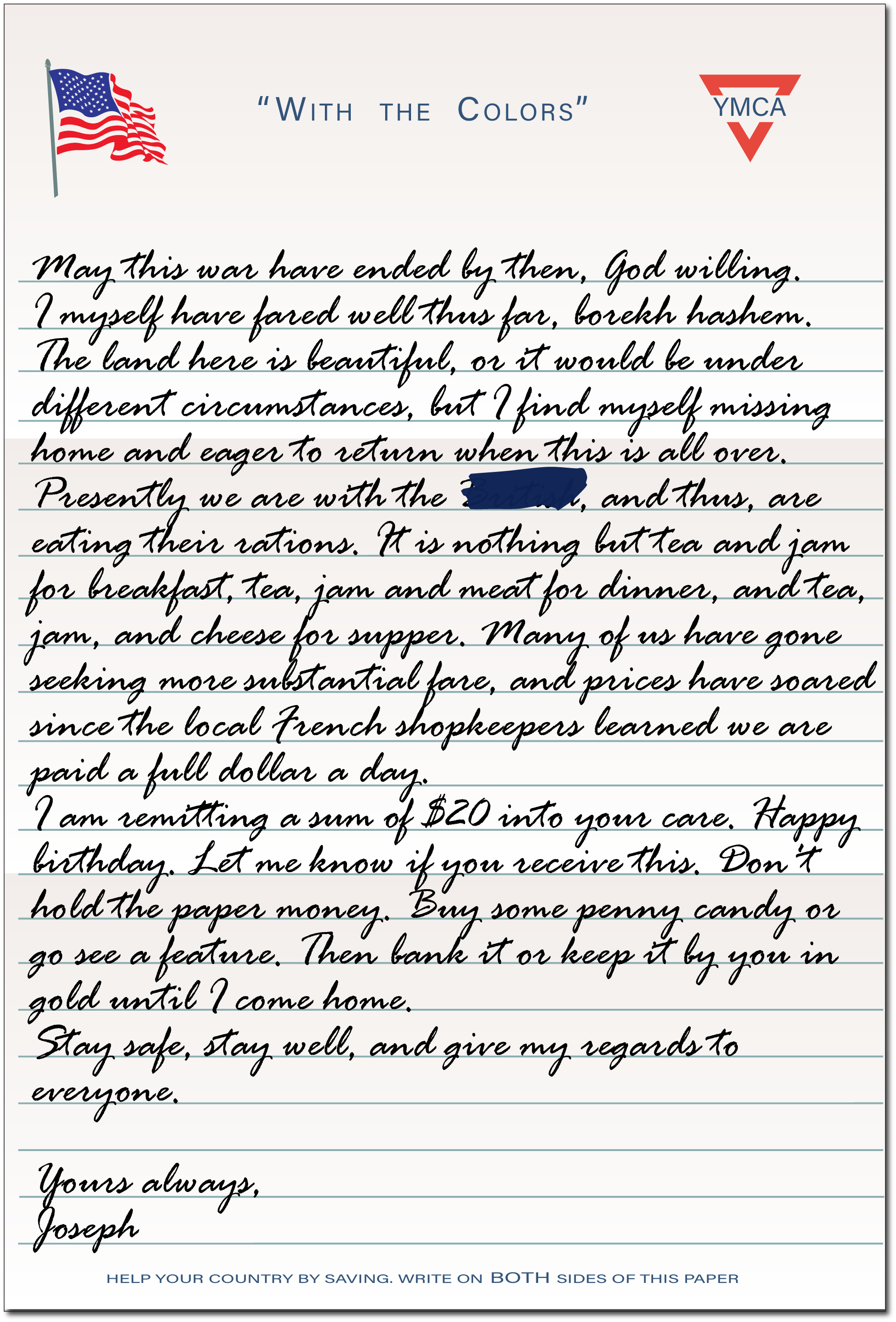
He didn't want to start a fight with Józef, though. Not now. He didn't want to disappoint him like that. What was done, was done. At least this way he was bringing home a steady paycheck of his own instead of having to leech off of his brother. For the first time in his life, he was earning real money.
And there would be time enough for Józef to yell at him whenever he found out the truth, somehow, on his own. Maybe Jakub would get lucky, though, and the war would end without him needing to go to France to fight and Józef never had to know. He could tell Józef that he had been held back a year at school, failed a few of his classes because he had been working too hard. There were loads of kids at school smarter than him, after all.
And maybe Józef wouldn't even be mad when Jakub showed him all the money he had earned while in the Army, though he'd probably order him to save some it for college.
And then, before he knew it, it was his turn to be on a ship departing New York Harbor. It was nearly fall, now, the city long accustomed to soldiers leaving from it, but there had still been a crowd to see them off anyway.
There had been a medical inspection before the were allowed onto the ship. No one with a fever was allowed to board.
But Jakub had passed, had been allowed to board. He stood there, watching first the skyline of then city and then the Staute of Liberty become smaller and smaller until, finally, even she had vanished, swallowed up by fog.
Sometimes, it felt like his entire life was nothing more than watching things as they vanished into the distance.
At least this time, though, he wasn't the one being left behind.
War was boring. War was hell.
The trenches were muddy, some of them falling apart right before your eyes. Others were only intact thanks to planks of wood and sandbags shoring up the sides.
Some had names – named after streets in London and Paris and even New York City, now.
It was always wet. Always muddy. Jakub had thought he was being useless, back at home and knitting what felt like an endless torrent of socks. But he knew the truth, now.
There was no such thing as enough socks. Not in the trenches.
There was no such thing as enough of anything, other than death and boredom.
There was never enough food, or water. What water they did get tasted bitter, flavored like gasoline. Many men took to drinking water out of shell holes – a risky chance, since the holes just as often as filled with remnants of gas as they were water. But the hope of water that tasted only of mud instead of gasoline was better than none at all. Cigarette rations were periodically issued. He smoked a few but mostly saved his to trade for food.
Some days, there wasn’t much to do other than wait. No one wanted to be the first over the top. So it was waiting, and waiting, and more waiting – interspersed with eating and sleeping and letter-writing.
Jakub kept meaning to write more letters to Józef, but, in the month since landing France, he had only had the time to scrawl off two hurried accounts of his fictional “school” days to send to Henry to mail to Józef for him.
It felt like they were always knee deep in mud.
There wasn’t anything anyone could do about enemy shells – only try his best to get away or be dug into the grounds so deeply that, hopefully, it was impossible for any to injure him. The joke in the trenches was that you could walk into the trenches a human and come out as a perfectly good mole.
Each country’s trench had a different style, too. The French trenches were the deepest, but not at all clean, even by the standards of the front. British trenches preferred sandbags and wood for shoring up, but the Germans' had an odd sort of wattle woven fencing built into the sides.
Most days were nothing but filling sandbags – though someone always had to be on sentry duty for each section of the trench, of course. Evacuating the ones too sick to fight to the hospital, or disposing the bodies of the ones too dead to. So many soldiers got sick. At this rate, the flu would kill them all before they could finish killing each other.
Sandbags, sentry, sleeping. Letters, if he had the time and the energy to read or write them.
Sleep was accomplished by finding a firestep and sitting on it. Putting an overcoat over his head made for a sort-of tent. Then, sleep. Every now and then, he would jerk awake to the whistle and boom of a shell.
That was most days.
And then there were the other days.
The sharp crack of endless machine gun fire.
The piercing whistle and then rumbling boom of artillery.
The burning of gas in your throat and nose as everyone rushed to don their masks.
The tang of blood in the air so thick that you could almost taste it.
The odor of rotting flesh and the buzz of flies.
The soft, squelching pop as a bayonet went into a body.
The screams and gurgles of dying men.
It was Armistice Day. The war – people were calling it the Great War, the war to end all was – was over.
And Józef was dead.
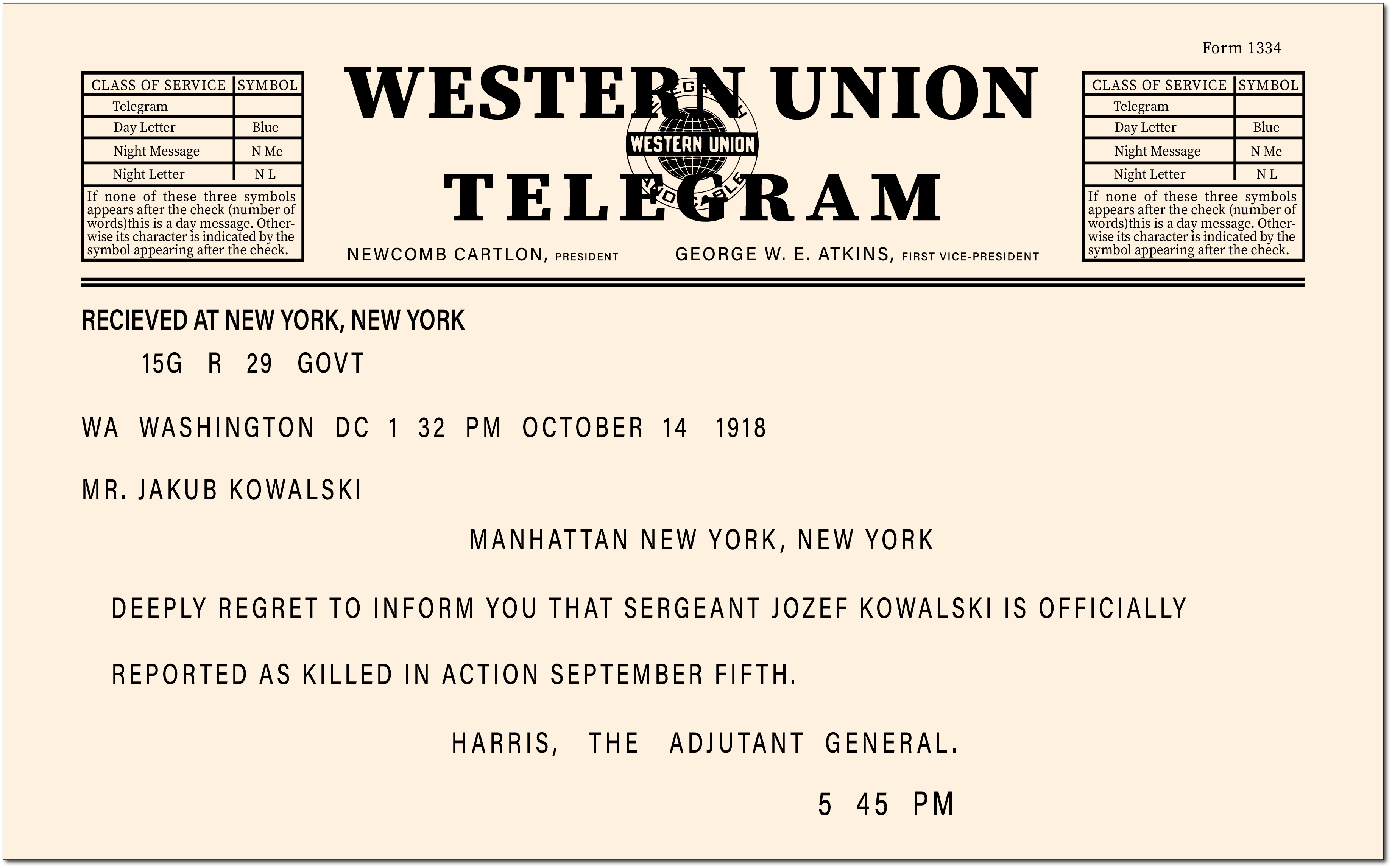
Henry had mailed Jakub the telegram that had been sent to “him.” With it, had been a letter from Mrs. Rogarshevsky expressing her condolences and sympathies and a small packet of mandelbrot – dried and crunchy, they mostly survived mailing well, assuming no rain had soaked the mail carrier.
Józef was dead. Had been dead for over two months now. He had died before Jakub had ever set foot in France.
Jakub should have felt something, he should have known. What kind of a brother was he that Józef had been dead for over two months and he hadn’t known?
He had noticed that the letters had stopped coming by way of Henry, but he had just chalked that up to war or maybe the mail ship had been sunk by Germans. And after all, it wasn’t like he had had much time or energy to write letters himself – he had just figured that Józef had been in similar conditions.
God, what had Józef thought about the lack of letters from him? Jakub knew people who received letters written several times throughout a week from family members back home – mothers and sisters and wives and sweethearts and children who wrote near daily. He prayed that Józef hadn’t died thinking that his little brother hated him.
He had almost wished for Józef’s forgiveness before he remembered – there was nothing he could be forgiven for. Because Józef was dead.
The next evening, after being relieved from duty, he found himself davening for the first time in…months, possibly. He had missed Rosh Hashana. Yom Kippur too. He didn't even know what he had done on those specific days, other than probably filling some sandbags. He just couldn't remember. It certainly hadn't been fasting or prayer.
Someone had to say the Kaddish for Józef, though. Jakub couldn’t bear the thought of his brother’s ghost wandering endlessly in search of rest because no one had said the Kaddish for him.
“Yitgadal v’yitkadash sh’mei raba.” One word following after another after another, like treading through a path well-worn into stone.
And if his voice broke in the middle, no one drew attention to it.
The war was over, but his brother was dead.
The war was over, his brother was dead, and life somehow went on.
They marched north.
Every town they passed through in Belgium greeted them like heroes. Liquor and wine bottles, covered with dust and cobwebs, were dug out of hiding places and many toasts drunk to their health. The regiment bugler insisted on playing “Garry Owen” in turn as they marched into each new town.
Once they crossed the border into Germany, however, the march took on a different tone. Victory flags and pretty girls waving from the windows of liberated towns turned into shuttered windows and deserted streets.
Villagers occasionally would run out to see the Americans march by. A few of them stared incredulously at the columns of men. Others dared to wave as they passed by.
Most stayed indoors, however.
Once they got there, occupation duty was occupation duty. From Triers to Coblenz was the responsibility of the Americans. The British were based out of Colonge. The French occupied everything else.
The armistice was extended. And extended. And then extended again.
The politicians talked. The president had just arrived in France for even more negotiations.
Meanwhile, Jakub found himself directing traffic. Enforcing checkpoints at train stations and reviewing papers of women traveling to the garrison to ensure they were on…legitimate business. Writing reports on the condition of the city so orders could be submitted for repair. Post and division schools were opened, and Jakub found himself attending classes once more – at night, after he got off duty. He owed it to his family to graduate high school, even if it wasn't the way they expected. There were other classes offered, too – baking and cooking and languages.
It didn't take long for the first initial distrust between the American soldiers and the local Germans to melt away like an icebox accidentally left open in the summer sun. After getting over the initial shock that the civilians "Huns did not, in fact, have hooves – and the civilians in turn realizing that, for the most parts, the soldiers had no desire for vengeance and would much rather flirt with the young ladies and spend their money at their establishments – relationships quickly blossomed.
As far as nearly every American doughboy was now concerned, Germany was clean, the land unscarred by war and mortar shells, full of food, and filled with charming fräuleins. No sooner than a bare handful of weeks after the first of the barracks went up and the officers billeted, many a soldier could be found in the local bars and restaurants after a day of duty, making the acquaintance of the local fräuleins and enjoying German beer and wine.
Certainly, most of them longed to return home – but in the meantime, the general attitude was they might as well enjoy their time here if they were going to be stuck in Europe. And it was better to enjoy themselves than to dwell on the bodies piled up behind the hospital tent, increasing by the day as they awaited the labor battalions to cart them out to be buried. The pile grew faster than the bodies could be carried away.
Jakub had heard that the French were having a much harder time pacifying their sector, but at the rate the American occupation was going, the hard part was going to be convincing the soldiers to leave.
Assuming they weren't all dead of the Spanish flu by then, anyway.
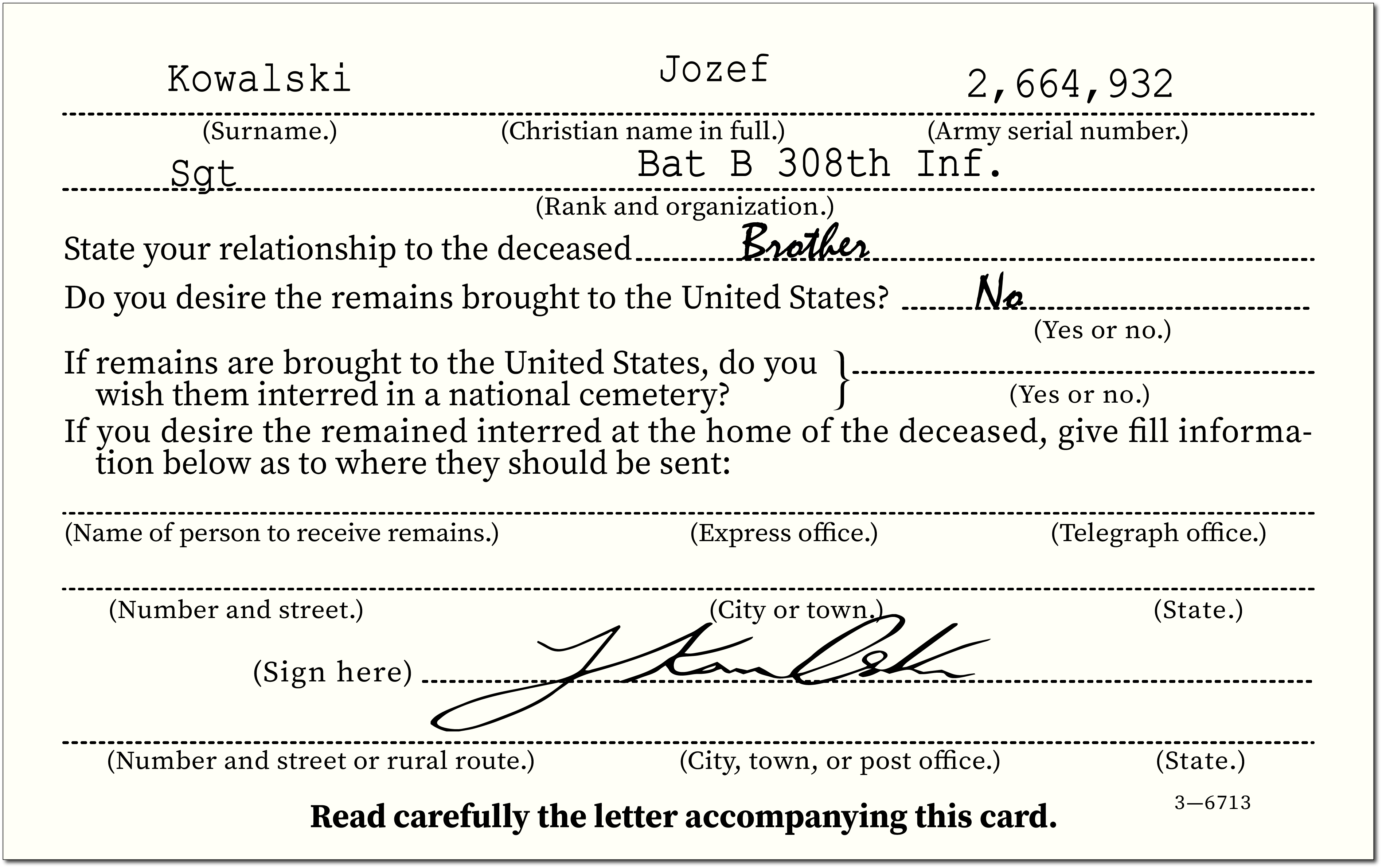
When the postcard had first arrived, Jakub had stared at it for a long moment, uncomprehending.
All he could think at the time was how that was so many bodies. He had lost count of the number of men he had seen blown up, gunned down, drowned in mud, or even just died shivering and curled up on hospital pallets.
And the government was trying to bring their bodies home now? Over a year after the first of them had started dying?
Józef was dead. His body deserved to be left in peace, not dug up and plunked onto a ship and dragged across the Atlantic – for what? Józef wasn’t there anymore. He wouldn’t want to be seen like that, no one deserved to be seen like that. And Jakub owed his brother that much, at least – to respect his body, when he hadn’t respected his wishes in life.
Wherever here he was buried, he should be allowed to rest peacefully. He had died for this land, and now he would forever rest in it.
So he had said, “No.”
And now here Jakub was, almost three years after his brother's death – standing at the foot of a grave, staring at the headstone.
It was yahrzeit, or as close to it as he had been able to manage, and he had requested and been granted furlough.
The headstone looked so formal, so impersonal. A name, a unit, a date. Nothing else. Just one more grave among thousands.
He didn’t even know how much of Józef’s body was buried here. He knew of men who had been blown up so completely that the only thing left of them that anyone had been able to find was a coat collar. Maybe an arm.
He hoped that wasn’t what had happened to Józef.
Staring at the smooth expanse of pale granite, so different from what they had been able to afford for Mame and Tate, he tried to find the right words. He failed. He tried again. “Zayt mir moykhl, Józef.”
I’m sorry, Yossel.
I’m sorry, my brother.
Three times for forgiveness – except Józef couldn’t forgive him anymore. He was dead.
It didn’t feel enough.
Jakub tried to imagine talking, as if they were sitting side-by-side on their trundle bed or on the ferry bench, telling that carved block of granite about finally almost completing high school.That didn’t feel right either.
This wasn’t his brother, this was just a rock with his brother’s name carved on it. That it was a prettier hunk of rock than the ones marking the graves of their parents didn’t make it any more real. Didn’t make his brother any less dead.
How was any of it supposed to feel real when Jakub never got the chance to see Józef’s body safely into the ground himself?
And in the end, it was ritual that he fell back on.
“Yitgadal v’yitkadash sh’mei raba.”
Once again, he recited the Kaddish. There was no minyan, this wasn't properly done at all – but he recited the words anyway.
“Oseh shalom bimromav, hu ya’aseh shalom aleinu, v’al kol yisrael. V’imru amen.”
May He bring peace. May He bring peace. Peace to us and all of Israel.
May He bring peace. May He bring peace. Peace to us and all of Israel.
May He bring peace. May He bring peace. Peace to us and all of Israel.
And let us say, Amen.
As he trailed off on the last notes of Oseh Shalom, Jakub prayed.
Let there be peace, he prayed. Please, God, let there be peace.
His hands fumbled, nearly dropping the match as he tried to light the yahrzeit candle he had bought while passing through the Jewish quarter of Reims.
Once again, his voice broke singing El Malei Rachamim. He stumbled a bit, uncertain of a few words without a siddur or hazzan to guide him, but the melody would be carved into his heart for the rest of his life – so he hummed to fill in the gaps.
He left a stone, a single lonely stone, behind him as he turned around and walked away.
As he washed his hands at the first water pump he could find – one hand over the other over the other – all he could think was that if not for the pebble, if not for the candle, no one would know that anyone had visited at all.
Just one more grave among endless rows of them.
On the train rattling and clanking over the rail heading east that night, whenever he tried to close his eyes all he could see were those endless rows of graves – rows and rows of them, stretching out further than the eye could see across those beautiful green hills Józef had died for.

Jakub had two weeks’ worth of furlough left and instead of traveling west to Paris, or east onward to Berlin the way many of his barrackmates had urged him to do – for the female company, they had said, winking with a sly smirk on their faces – he had made a spur of the moment decision.
He traveled east, then kept going east.
East, past Frankfurt and Leipzig and past Berlin.
East, past the border. It was a different border from the last time he had crossed it, so many years and what felt like two lifetimes ago, having been redrawn by war.
But it was close enough. Watching the countryside pass by and as they moved from station to station, he could feel the slow gradual shift in the landscape as German started to mingle with Polish, then began to give way, then nearly disappeared completely as he retraced the journey he had made as a boy. Borders came and borders went, but the language of the people rarely changed.
Maybe that was what would happen to the Rhineland. Not that that was his problem. He wasn’t smart enough to be in charge of trying to solve that problem, thank God.
It was as the train pulled into the railway station in Poznań that he realized there was one small problem with his plan. He had no idea how to get…home wasn’t the right word for it, not anymore, but regardless of what it was to him, he had no idea how to find his way back.
Seconds felt like minutes felt like hours as he frantically scanned the map, trying to find something to anchor his memory with. Then he heaved a sigh of relief when one familiar word jumped out at him from a tangle of lines and letters.
Włocławek.
He couldn’t actually remember anymore exactly how close it was to Kowal, or how to get to Kowal from there, but he remembered that it had been within an easy day’s ride or even a walk. Surely someone in Włocławek had to know which road would take him where he wanted to go.
And then he encountered his other problem. The line ended at Poznań. There were nearly no trains going further east because all the railways had been either destroyed or seriously damaged during the war nor had maintenance been a priority.
The imperial army had destroyed every bridge and railway they could as they retreated during the Great War to prevent the Germans from making use of them – and while the Germans had repaired most of the lines sufficiently for their own logistical needs, it was far from enough. Years and years of being continually under fire, only repaired enough to keep troops supplied with food and coal and ammunition, left them in near-ramshackle condition now.
And then the war had continued on here for over two years even after Armistice Day, both sides destroying the railways in order to prevent the enemy from making use of them.
Jakub sighed and began asking for directions to the nearest freight stables. Eventually, he found a carter willing to take him to Bydgoszcz, where he could board a boat that would take him where he needed to go.
As he stepped off the dock and onto the cobbled streets of Włocławek, nothing looked familiar to him. The bridge Samek had once dared him to run across all by himself was twisted, burned mass of wood and stone. The cobblestones were uneven and anyone who didn’t watch where they were going tripped over the gaping hole left behind where the stone had been pried out. Trenches had been gouged deeply into a few streets. Where trees had once grown in his memory, only stumps remained now – and palisades constructed in their place. Buildings he had faint memories of were now nothing but rubble.
The people were still there, though, and it felt like stepping back in time. The same language, the same clothes, just shifted in time and surrounded by the devastation of war.
He stopped the first friendly, but still a stranger, face that he saw and haltingly asked for directions to Kowal, trying to find the right words to describe it. For all he knew, he was a hundred miles off.
But the man immediately understood what he was asking and pointed Jakub towards the road he needed to travel on. Then he paused to consider for a moment before asking whether Jakub wished to rent a cart and a horse, but Jakub just shook his head and thanked him for his help.
If Kowal was close enough to only be a two or three hours long journey on a plodding cart house, then it was close enough to walk to.
He could walk, they had marched through France to Belgium to Luxemburg all the way to the Rhineland in Germany.
What was another hour or three compared to the miles and miles he had traveled already?
He arrived just in time for Yom Kippur.
Everything looked different from how he remembered it. Houses had burnt down, as had the slaughterhouse and a school building. New buildings had been built, others had been torn down to make room for new ones, or repaired or even repainted.
The bakery looked different, though it was still there. Somehow, it was smaller than he remembered. It had felt like the entire world to him once. Now, it was just – a bakery.
No one recognized him at first, thinking him a stranger – to wander out in the open with nothing covering his head, how could he have been anything else? But once they realized he was Michal’s boy, Raizel’s, Mojzesz and Lajka’s boy, there had been a great cry and surge of questions and he had been rushed to the bathhouse to be cleaned. There was a kittel and and a yarlmulke and a tallit all laid out for him, when he stepped out.
Then, night fell and came Kol Nidre.
“Ahl da’at hamakom ve’al da’at hakahal b’shivah shel ma’alah u’beshivah shel matah anu mahtirin l’hitpalel bayn ha’abaryanim.”
He breathed, in and out, letting falling back into the words. Hearing the murmur of voices of those beside him speaking in unison, as one.
“Our vows are no longer vows, and our prohibitions are no longer prohibitions, and our oaths are no longer oaths.”
Jakub had made so many vows. He had made vows to his parents, he had made vows to Józef, he had made vows to his country. He had broken most of those vows.
That night, sleeping in a borrowed bed, his dreams echoed with accusations. Mame and Tate and Józef all demanding answers, snarling that he had wronged them.
“Ashamnu, bagadnu, gazalnu, dibarnu.”
His heart ached as he recited the words, one voice among hundreds. Yes, he had trespassed, he had betrayed, he had acted wrongly.
Everyone had.
We have trespassed, we have betrayed, we have robbed, we have slandered – so the viduy went.
His head spun and pounded, his mouth was dry, but he continued on anyway.
Then, after what felt like forever and only a second at the same time, the sharp cry of the shofar sounded and the gates closed for another year.
Everyone ate festively afterward, asking him questions about where he had been, what had happened to him, where his family was. Tears had been wept when he told them of Józef’s fate, of his death.
He wept upon learning how much everything had changed. So many people had died – the war or the flu or just life. Others had left. Just like Jakub had. And his parents. And Józef.
Sala, only a little girl when he had left and a wispy memory of blonde hair and smiles, was a married woman now – one baby on her hip and another in her belly. She had shaken her head time after time when he had tried asking after name after name.
Bubbe and Zayde were dead – starved, during the war when the German had taken over.
Tobjasz had run off with the Mensheviks. No one knew what had become of him.
Danielek and Eliasz had been killed in the war, fighting against the Germans.
Chaskiel had left for Palestine, taking his wife and three young children with him along with dreams of a kibbutz. No one knew if he had made it, but the hope was they were alive and well and planting olives and happy, somewhere.
But others had survived. They had returned here and rebuilt, the way they had for the last hundred and more years. Beryl was getting married in a few weeks. Sala’s baby boy was named Tobjasz, after his uncle whose fate was unknown, but presumed to be dead. There were dozens of cousins, born after he left, that Jakub had never gotten a chance to meet – children who played in the streets the way he and Józef had, once upon a time.
He gave his family all the money he had come here with, leaving himself just enough to travel back to make his way back to Coblenz. He stayed another night, telling stories of his own life in America and listening to the happiness and sorrow of everything that had happened since he had left.
He would have offered to pay for anyone’s passage to America, for anyone who wanted it, but new immigration laws just this year meant that almost no Jews were allowed in anymore. Few wanted to make that journey anyway, it seemed. This was their home, for better or for worse. And besides, it was a new government now – maybe this time, it would be better.
The next morning, after a breakfast he was helpless to refuse, he left.
This time, he didn’t look behind him as the town vanished into the distance. It wasn’t his to claim, his to say goodbye to. Not anymore. He didn’t know exactly why he had gone back there, what he had thought he would be returning to.
Some idea of home, perhaps. A dream and childhood memories of a place that didn’t exist anymore.
Jakub didn’t look back.
He just closed his eyes and listened to the rhythmic clip-clop of the horses’ hooves. Hersh Leibowicz was too old for this work – it was his son now who Jakub hired to take him to Włocławek.
Upon returning to the garrison, he renewed his enlistment contract.
It wasn’t like he had any other plans, no home to return to, and at least this way he could have a roof over his head and food to eat and even money accumulating in the bank.
The Book of Life had closed behind him. There was no such thing as going back. Only forward.
It was odd watching anything come closer, growing bigger and bigger, rather than vanishing into the distance. That it was the Statue of Liberty made Jakub feel like a little boy again, standing excitedly on the deck of a ship as he cheered and waved a little paper flag back and forth so hard he had nearly smacked a nearby kid, just as excited and yelling just as loudly, in the face with it.

The Army had no real use for soldiers, let alone this many infantrymen, in peacetime. They lingered for a while, were put to work taking down houses and buildings and training yards - the same ones that had been constructed for the war, what felt like a lifetime ago.
So he stayed in the Army for a few months, and then it released him, set him loose to live as he chose.
He accepted the first job he stumbled on – a canning factory, of all things. He had the money to pay for a room at a boarding house for the time being, but he had learned from childhood the dangers of not working enough.
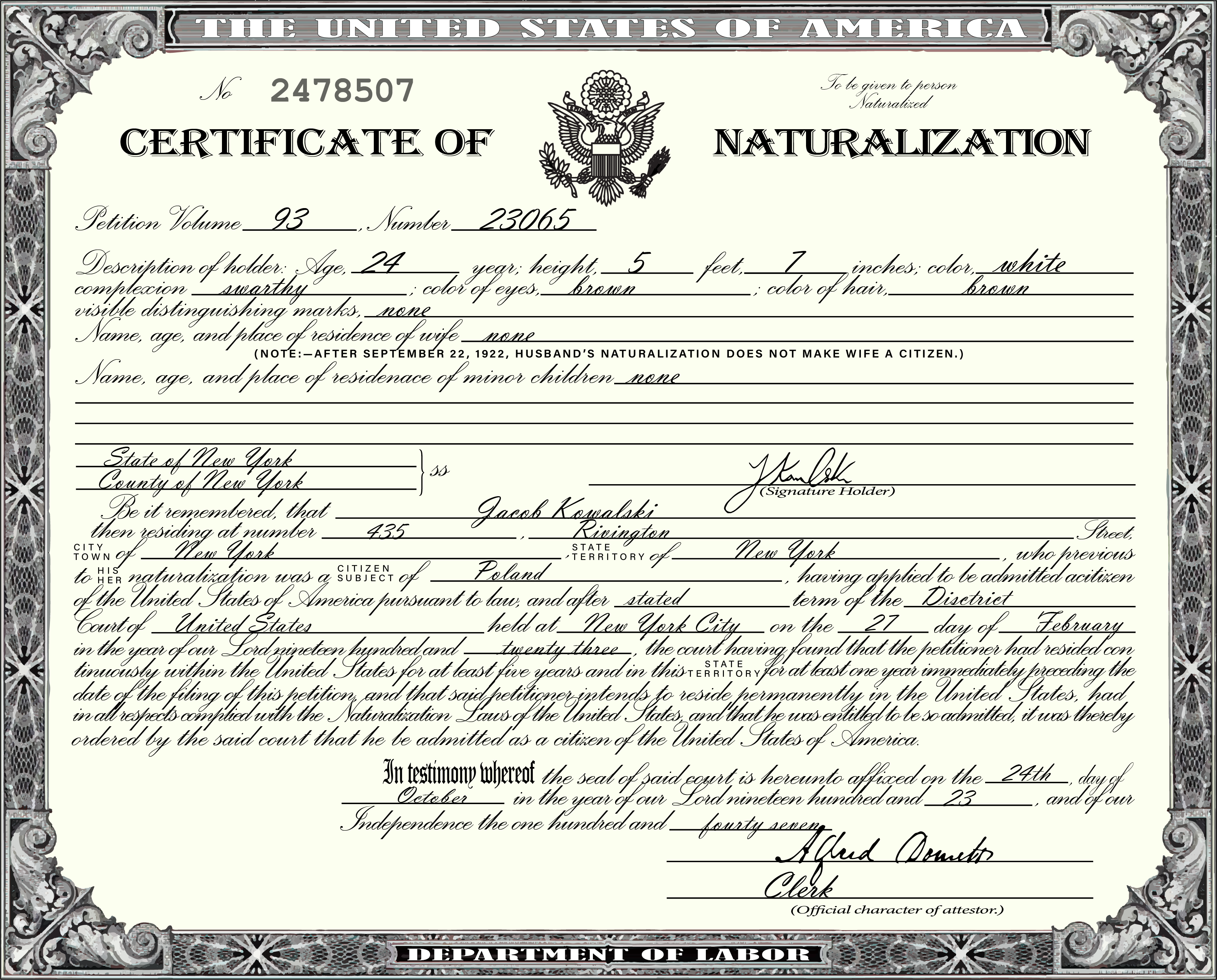
And then he filed for citizenship. It felt like the right thing to do, after – well, after everything. It was a right thing that he could do, anyway. Something his family would have wanted.
The process was simpler than he had remembered it being when he had left, but apparently they had simplified things in the years between. For men who had served in the war, anyway. All he had to do was file papers saying that he wanted to become a citizen. Then, a judge would give him a date where he would take an oral examination and, if he passed, that would be the end of it.
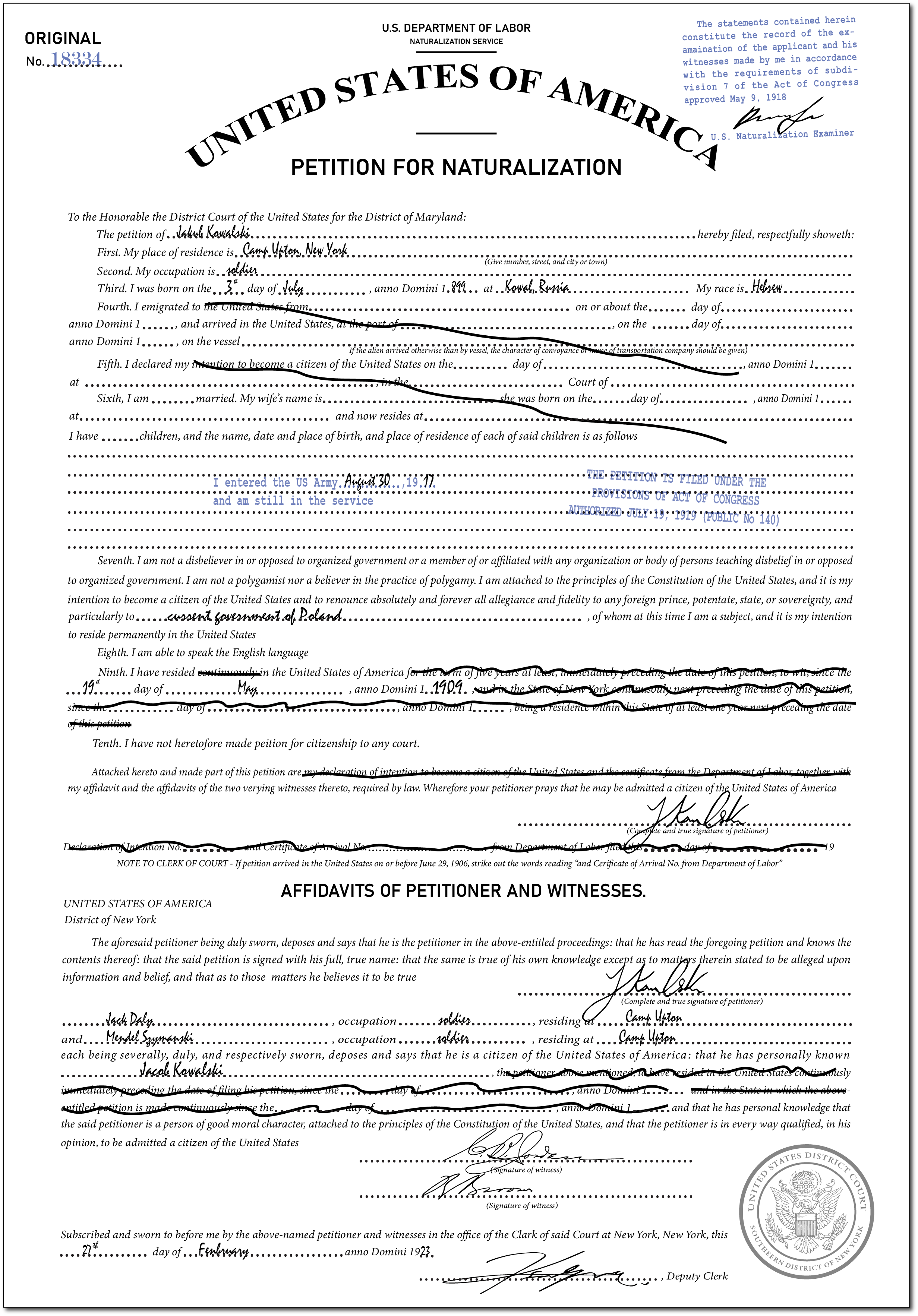
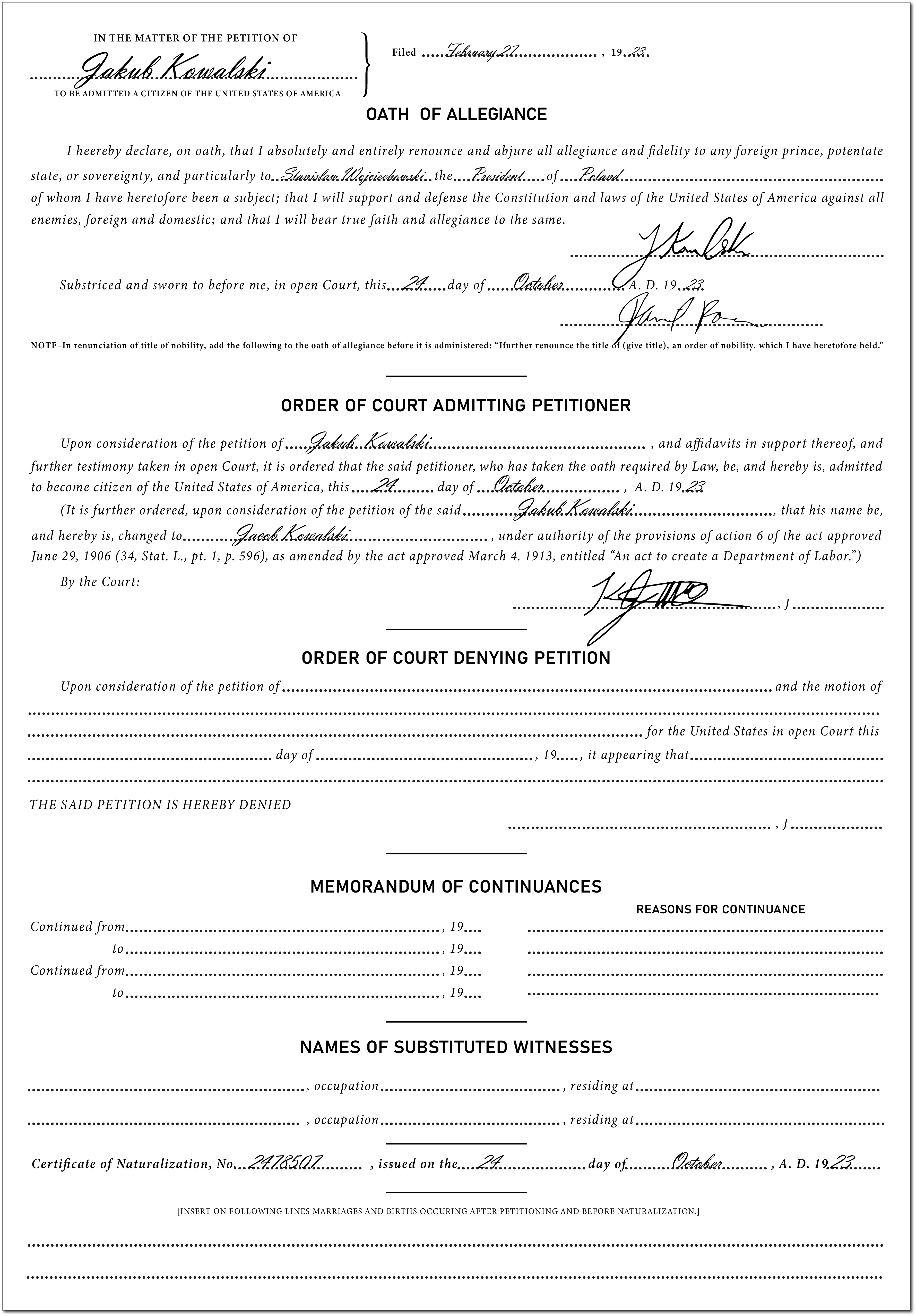
He had no idea whether he was the citizen or subject of any country, at the moment. The tsar was gone, a Polish government risen in its place, though he had not been born under it and neither had he sworn himself to it. But the Polish government was as good an answer as any, he supposed.
He filed the papers, endured the shifts at the canning factory, and attended weekly night classes for those seeking their citizenship. He had finally finished high school in the Rhineland, but better safe than sorry. The judge examiners could ask any question they liked, even the height of Bunker Hill.
The day came and he put on his best suit and walked towards the courthouse. The city had changed so much in the years since he had left. New buildings, higher and higher and stretching to what seemed like impossible heights, were springing up before everyone's eyes.
The examiner asked him half a dozen questions. He answered them – hopefully correctly.
Then judge stared down at him. "If you would please repeat after me, Mr. Kowalski."
“I hereby declare, on oath, that I absolutely and entirely renounce and abjure all allegiance and fidelity to any foreign prince, potentate, State, or sovereignty, and particularly to Poland of which I have heretofore been a subject; that I will support and defend the Constitution and laws of the United States of America against all enemies, foreign and domestic; that I will bear true faith and allegiance to the same; and that I take this obligation freely without any mental reservation or purpose of evasion. So help me God.”
He repeated those words after the judge, the recitation and rhythm of the words feeling oddly like a prayer.
He was Jewish more than Polish, more Polish than Russian. Born under the tsar, raised in the shadow of New York City, bled in the hills of France.
And now, he was becoming an American.
Jacob stepped out of the courthouse and stood, just for a moment, on the steps, looking across at the city. So many buildings, so many people, so many names and countries all thrown together here.
And now, he was one of them.
Jacob hadn’t planned on staying at the canning factory, when he had first taken the job. He had accepted the job figuring that it would pay for his room at the boarding house while he found another job – selling knishes off a pushcart or a restaurant or maybe even a bakery. Mr. Schimmel would have offered him some work if he asked, he was fairly certain. That would have been nice.
But he was just tired. Too tired to find another job, too tired to care. What did it matter, anyway? Working for a baker wasn’t any better than a factory job – it wasn’t wasn’t what he was supposed to do.
He wasn’t what his family had wanted, he would never be what they had wanted, and one job was just like another, really. Mame and Tate and Józef would have felt nothing but sorrow and disappointment in him, he knew – so what was the point?
"Yankele will learn the Law,
The Law he will learn,
Great letters he will write,
Much money he will earn."
The song Mame had once sung by his bedside now burned Jakub. Józef had been a good son, had fulfilled his duty to both his parents and their country. He would have graduated from City College by now – probably finished law school
“Every judge who renders a fair decision is like a partner of the Holy One in the act of creation,” Józef had once said, his gaze earnest and steady and a smile on his face. "I want to be that, one day."
And here Jacob was working in a canning factory.
Józef had wanted to pursue justice. Józef had been a good son – a good citizen, for all that he never got the chance to officially be one. But Józef was dead. And Jacob was all that was left.
The canning factory had been the first place to offer him a job after the Army had discharged him. He had taken it because even with the money he had saved up while he had been in the Army, his room at the boarding house wasn’t cheap. Most factory workers shared rooms for that exact reason, he knew – but he couldn’t bear the thought of sharing a room with someone else again.
Not back in New York City, anyway. He had moved several blocks away from the neighborhood he had grown up in – not that he still recognized that many faces even on Orchard Street. He had been gone for six years. Six long years. People had died and moved and married in those six years.
Józef had died.
So Jacob moved away. Still in the Lower East Side, because that was all that he could afford and a part of him couldn't bear to leave – but somewhere that was just far enough away where he could have a fresher start instead of memories haunting him around every corner and street sign and pushcart. He missed the familiar comfort and surroundings of Orchard Street sometimes, but trying to face people who had known both him and Józef, face his failures –
Jacob just couldn’t do it.
He had lied to Józef – his only brother, his only family left. His only family that had been left. Józef had died believing that his little brother was safe in New York attending high school. Now that he was dead, Jacob would never be able to atone for that.
He had betrayed, he had deceived, and nothing in the world could ever make that right.
So he stayed at the canning factory. Twelve hours a day, six days a week. Four weeks in a month, twelve months in a year.
Some days, when he could summon up the will and wasn’t too exhausted from work, he would pay the boarding house’s staff for the use of the kitchen and bake a bit. Old recipes that he remembered from home and that he learned from Mr. Schimmel.
Some nights, he even dreamed of owning his own bakery – of a place he could call his own that smelled of yeast and sugar and honey and had a warmth that felt like the softest blanket on a cold winter night. It wasn’t university, it wasn’t becoming a doctor or an engineer or a lawyer, but it would be his nonetheless. A place that would be his, that might even feel something close to home again.
He wanted that, tried to plan for that, he was just – tired. And every time he tried to plan for anything beyond the next day or week, it just felt like trying to grab that slippery carp swimming in endless circles inside his mother's old washing bowl, from so many years ago.